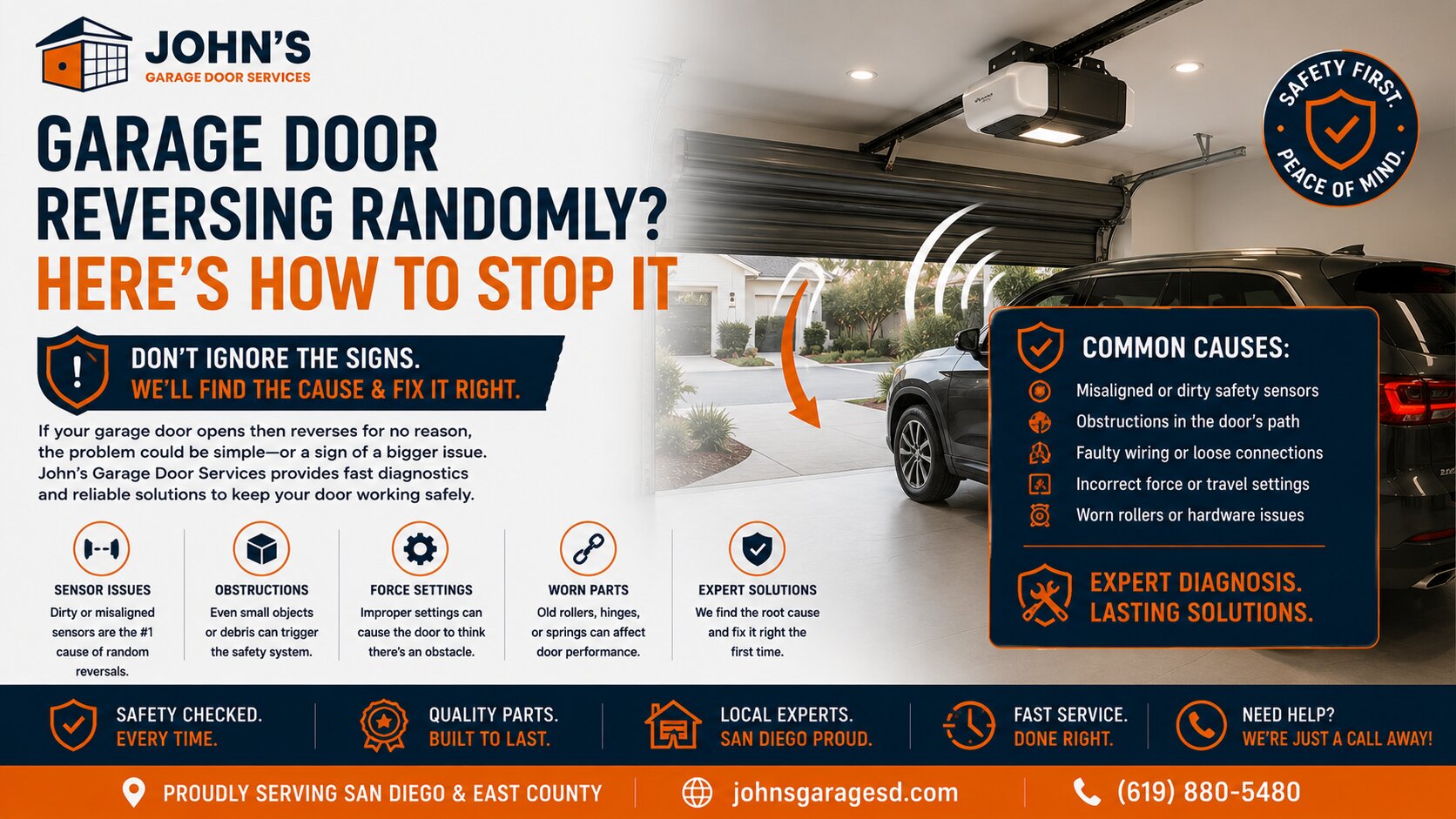
I get calls from frustrated San Diego homeowners almost every week about this exact problem. Their garage door starts closing, then suddenly reverses back up without anything in the way. After years of diagnosing these issues across San Diego County, I can tell you it’s usually one of three culprits.
Let me walk you through the most common causes and how we fix them. Most of these solutions don’t even require a service call if you’re comfortable doing a little troubleshooting yourself.
What Causes a Garage Door to Reverse Without Obstruction?
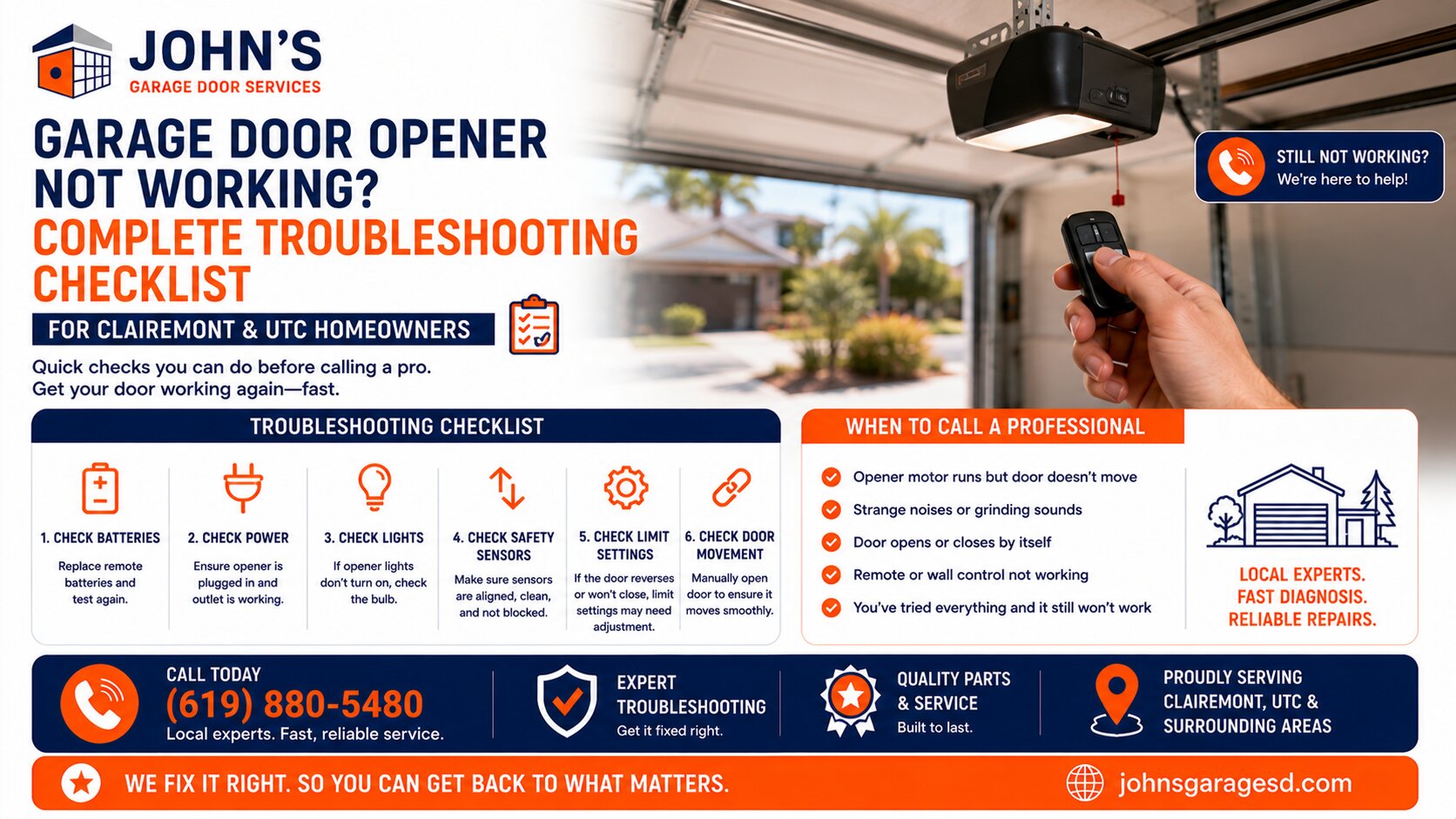
Your garage door reverses unexpectedly because the safety sensors detect a false obstruction, the close limit settings are incorrect, or the tracks are misaligned. These safety features are designed to protect people and property, but when they malfunction, they create the exact problem you’re experiencing.
The good news? Once you identify which component is causing the issue, the fix is usually straightforward.
Check Your Safety Sensors First
The photo-eye sensors on either side of your garage door opening are the most common culprits. These sensors send an invisible beam across the doorway, and if anything breaks that beam, the door reverses.
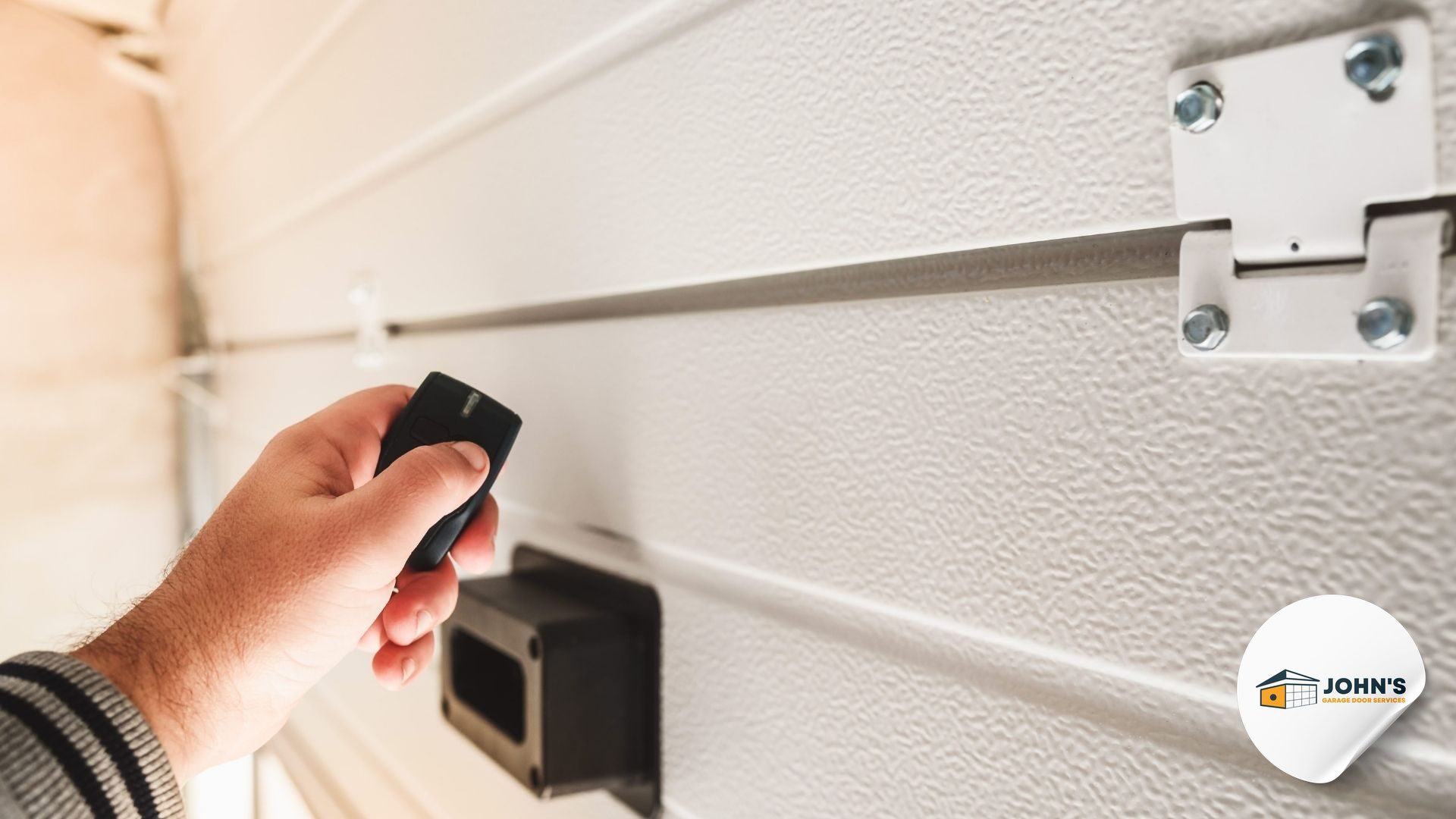
You’d be amazed how often our coastal marine layer leaves a film on these lenses, especially in Point Loma and La Jolla. That moisture combined with dust creates just enough interference to trigger false readings.
If one sensor got bumped by a bicycle, broom, or beach chair, even a slight misalignment will cause reversing. If you’re experiencing ongoing issues, consider scheduling Garage Door Maintenance Service to keep your system running smoothly.
Adjust Your Close Limit Settings
If your sensors check out, the close limit switch might be set incorrectly. This setting tells your opener how far down to move the door before stopping.
If it’s set too far, the door hits the ground and thinks it’s hit an obstruction, triggering the auto-reverse.
Inspect Your Tracks and Rollers
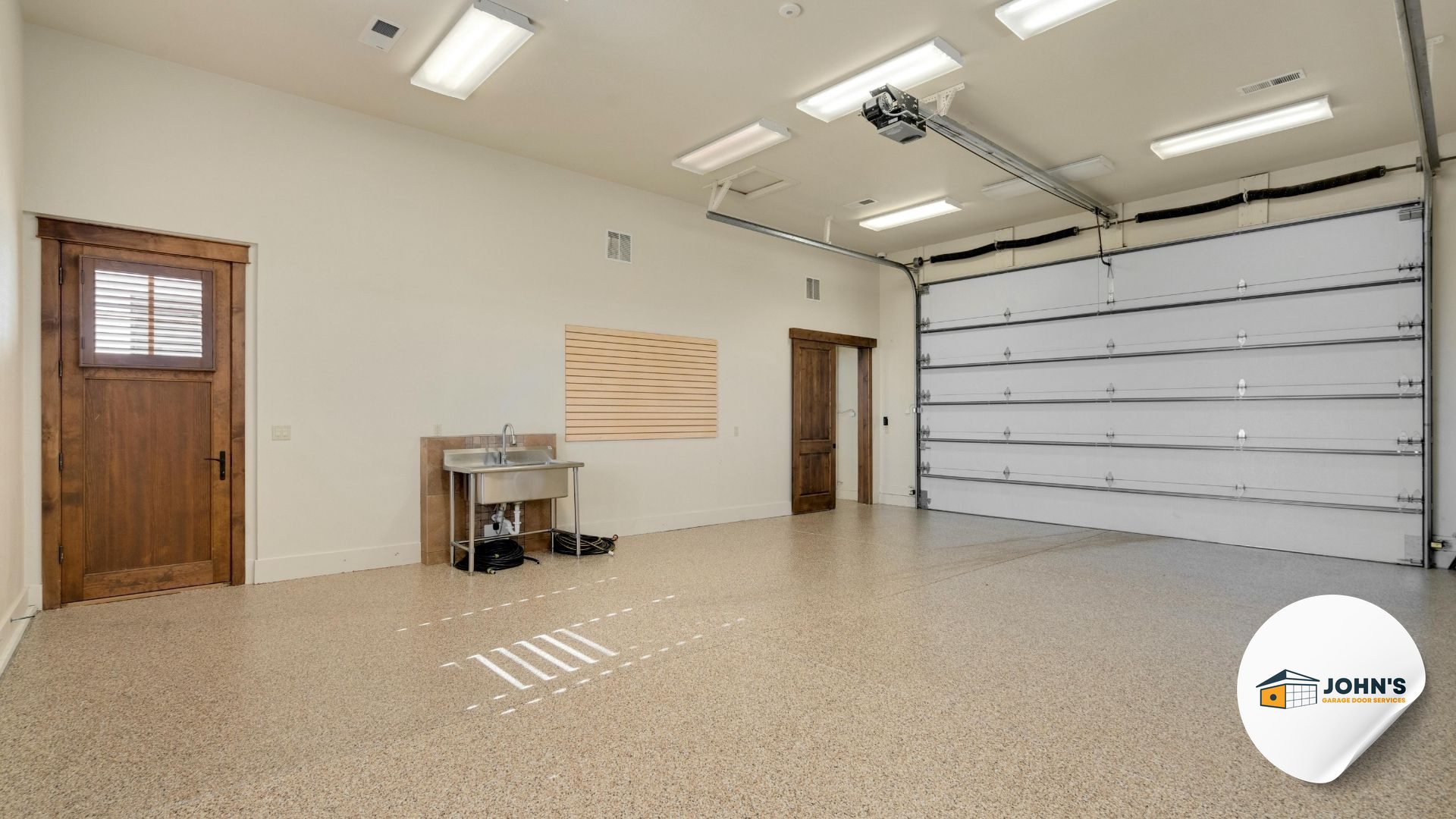
Misaligned tracks or worn rollers create resistance that your opener interprets as an obstruction. I run my hand along both tracks looking for bends, gaps, or debris.
Even a small dent from parking too close can cause problems.
When dealing with persistent mechanical issues, learning more about Choosing The Right Material For Your Residential Garage Door can help you make informed decisions about replacements.
Why Does This Problem Seem Random?
That’s why the problem might happen one day but not the next. I’ve installed sun shields on dozens of doors to solve sunlight interference issues.
If you’re thinking about upgrading your door to prevent future issues, check out our guide on How To Choose The Right Garage Door For Your Home.
When to Call for Professional Help
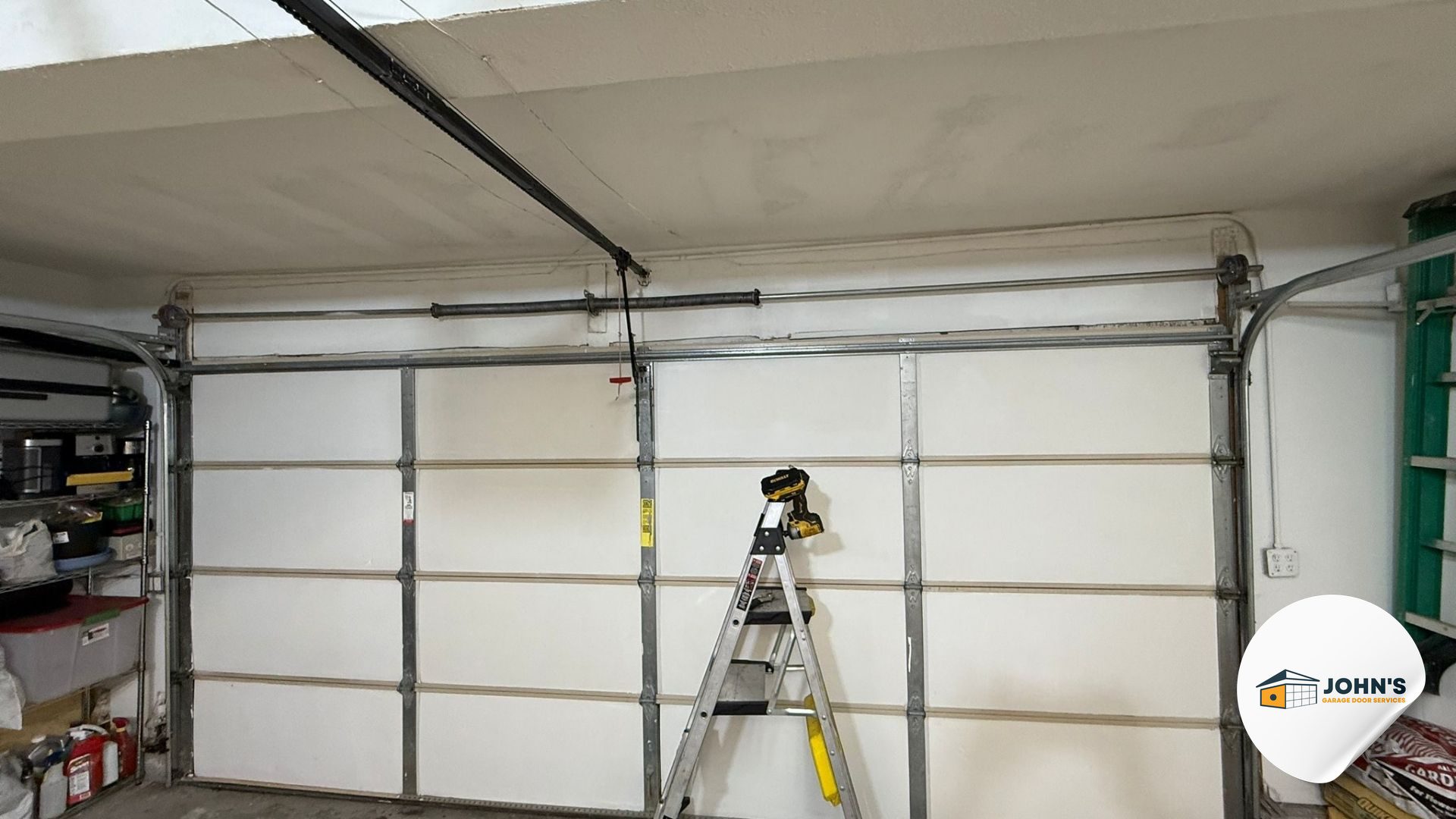
If you’ve checked the sensors, adjusted the limits, and inspected the tracks but still have reversing issues, the problem might be a faulty circuit board, worn force settings, or damaged wiring. These require professional diagnosis with proper testing equipment.
I’ve also seen cases where DIY repairs made things worse, especially when homeowners over-tighten the force settings trying to compensate for other issues. This creates serious safety risks.
Our team at John’s Garage Door responds quickly throughout San Diego because we know how disruptive a malfunctioning door can be. We’ll diagnose the real problem, not just treat the symptoms, and get your door working safely again. Get A Quote from us, and we’ll have someone out to help you resolve this frustrating issue.
John Josef – 15 Years of Garage Door Expertise – John’s Garage Door Services, Locally Owned and Operated. We provide top-quality garage door repair, installation, and maintenance with a strong commitment to honest, reliable customer service.