Over the past few years, I’ve watched smart garage door openers become incredibly popular throughout San Diego County. They’re convenient, sure, but I’ve also seen a troubling rise in homeowners asking me about hacking risks and cyber security.
Here’s what I’ve learned from installing and securing hundreds of Wi-Fi-enabled garage door systems across Southern California.
The truth is, your connected garage door opener can be vulnerable to cyber attacks if you don’t take proper precautions. But with the right anti-hacking technology and security practices, you can enjoy the convenience without the risk.
How Vulnerable Are Wi-Fi Garage Door Openers to Hacking?
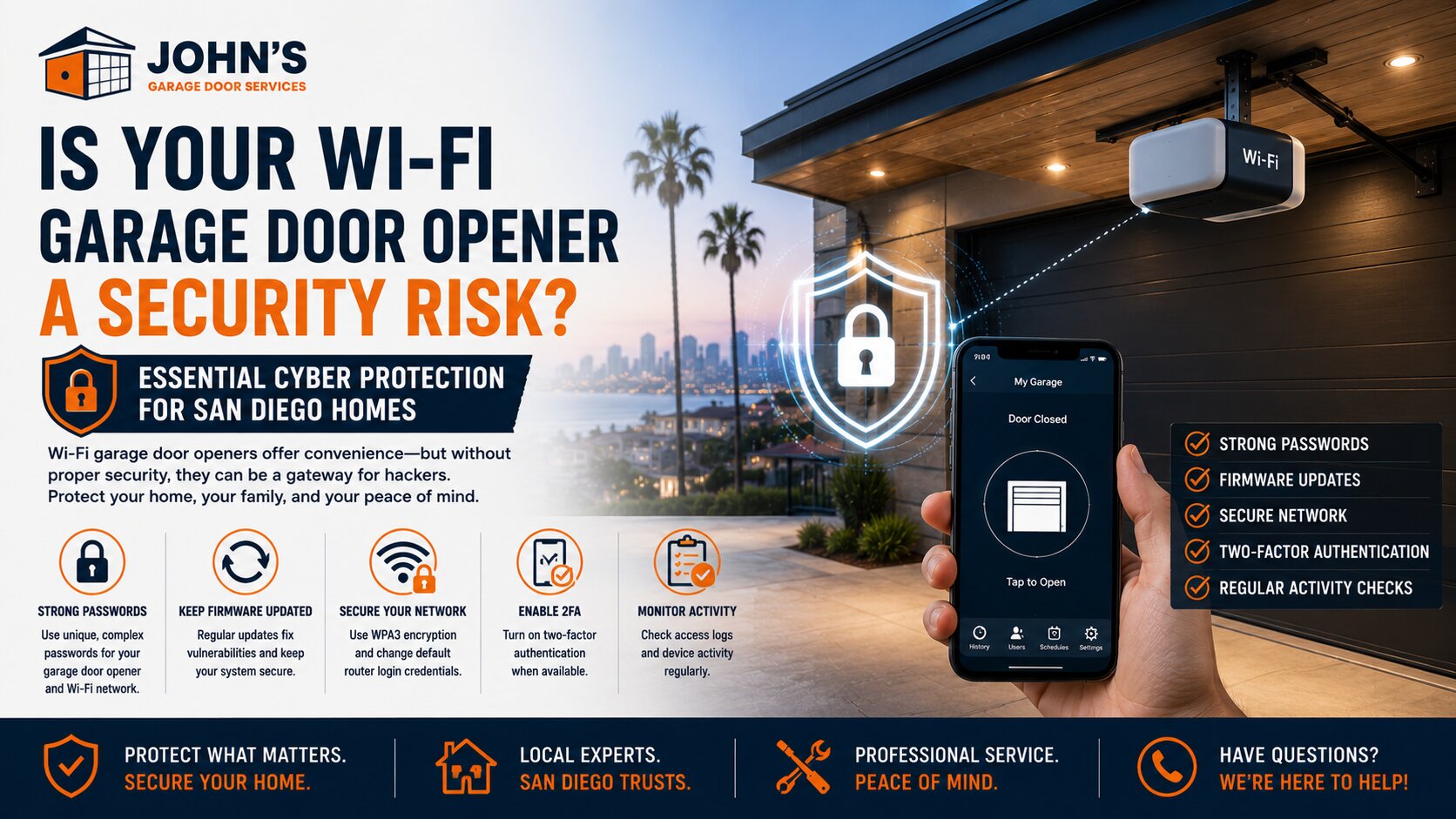
Modern Wi-Fi garage door openers use rolling code technology and encryption, which makes them significantly more secure than older systems. However, any device connected to your home network can potentially be exploited if your Wi-Fi password is weak or your router firmware is outdated.
I’ve seen cases here in San Diego where homeowners with default router passwords or no network encryption became easy targets. The garage door itself isn’t usually the weak point, it’s the home network it connects to.
What Security Features Should Your Smart Opener Have?
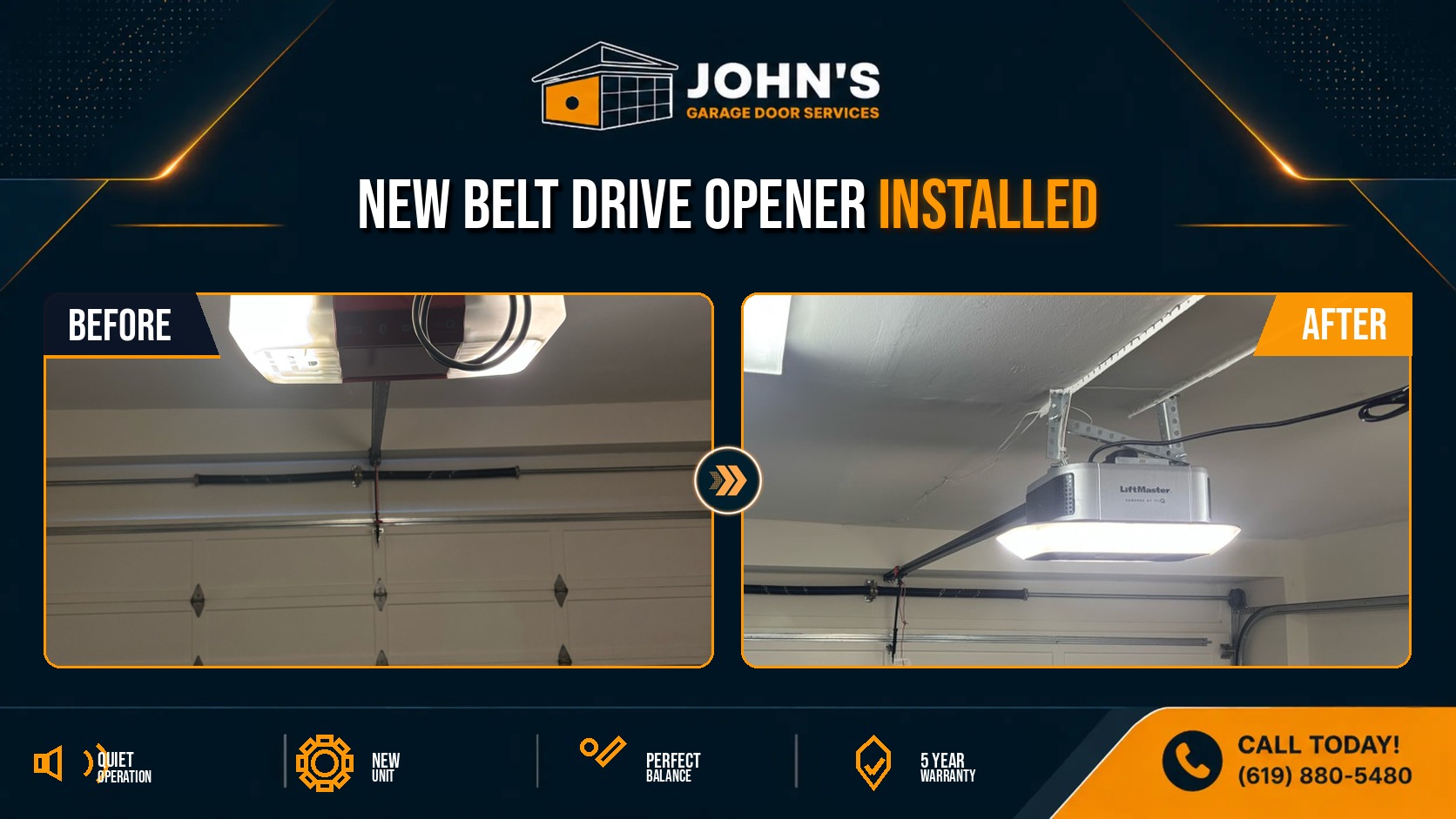
When I install Wi-Fi Garage Door Openers in Clairemont, La Jolla, or anywhere in San Diego, I always look for specific security features. The best systems include AES 128-bit or 256-bit encryption, which is the same standard used by banks and government agencies.
Protecting Your Home Network: The First Line of Defense
Keep your router firmware updated. I recommend checking for updates monthly.
Many newer routers can do this automatically, which takes one more task off your plate.
Creating a Separate Network for Smart Devices
Here’s a strategy I’ve started recommending to clients throughout Mira Mesa and Kearny Mesa: set up a separate guest network specifically for your smart home devices. Most modern routers make this easy.
This isolates your garage door opener from your primary network where you access banking, personal files, and other sensitive information. If somehow a smart device gets compromised, the hacker can’t reach your main network.
Manufacturer Security Updates and App Permissions
The garage door opener manufacturers I trust most release regular security patches and firmware updates. When I install a system, I always enable automatic updates if the feature exists.
Additional Security Layers I Recommend
Professional Installation Makes a Difference
I’ve responded to service calls where homeowners tried DIY installations and inadvertently created security vulnerabilities. Proper setup includes configuring all security features correctly, which many people skip in the rush to get their new opener working.
Regular Garage Door Maintenance also helps ensure your security features continue working properly.
At John’s Garage Door, we don’t just install your Wi-Fi opener, we take time to secure your entire system properly. We’ll walk you through all security features, help you set up strong authentication, and ensure your network configuration provides maximum protection.
If you’re concerned about the security of your current smart garage door system or you’re considering upgrading to a Wi-Fi-enabled opener, give us a call. We’ll assess your specific situation and recommend solutions that keep your home secure without sacrificing convenience.
Get A Quote today to discuss your security needs.
John Josef – 15 Years of Garage Door Expertise – John’s Garage Door Services, Locally Owned and Operated. We provide top-quality garage door repair, installation, and maintenance with a strong commitment to honest, reliable customer service.