After two decades serving San Diego homeowners, I’ve replaced thousands of garage door springs. One of the most common questions I hear is about spring lifespan, and my answer always starts with this: it depends on your specific situation.
Understanding how long your springs will last can help you budget for replacements and avoid the inconvenience of a broken spring when you’re rushing to work. Let me share what I’ve learned from years of hands-on experience in our unique Southern California environment.
The Standard Lifespan: What You Can Expect
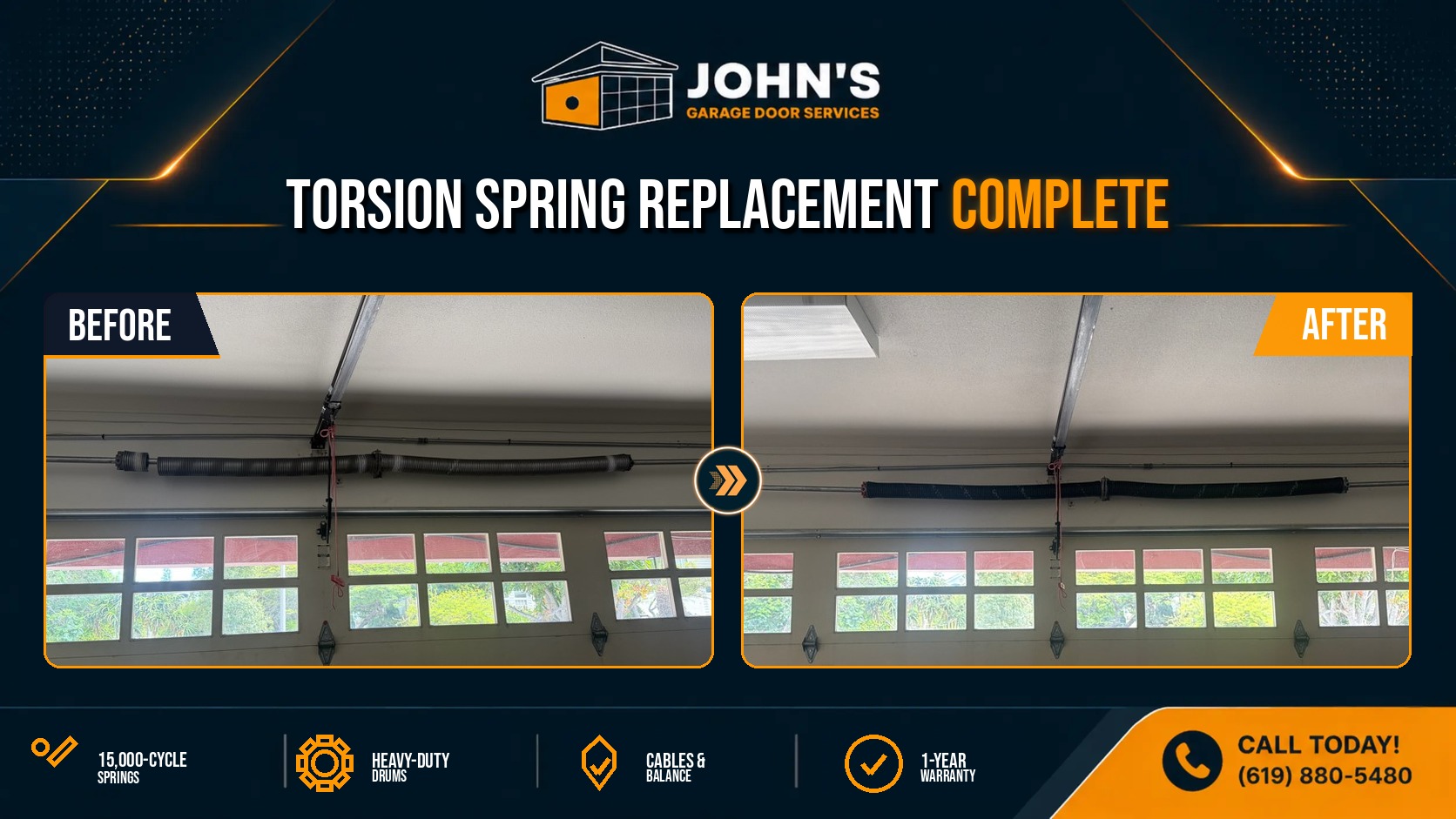
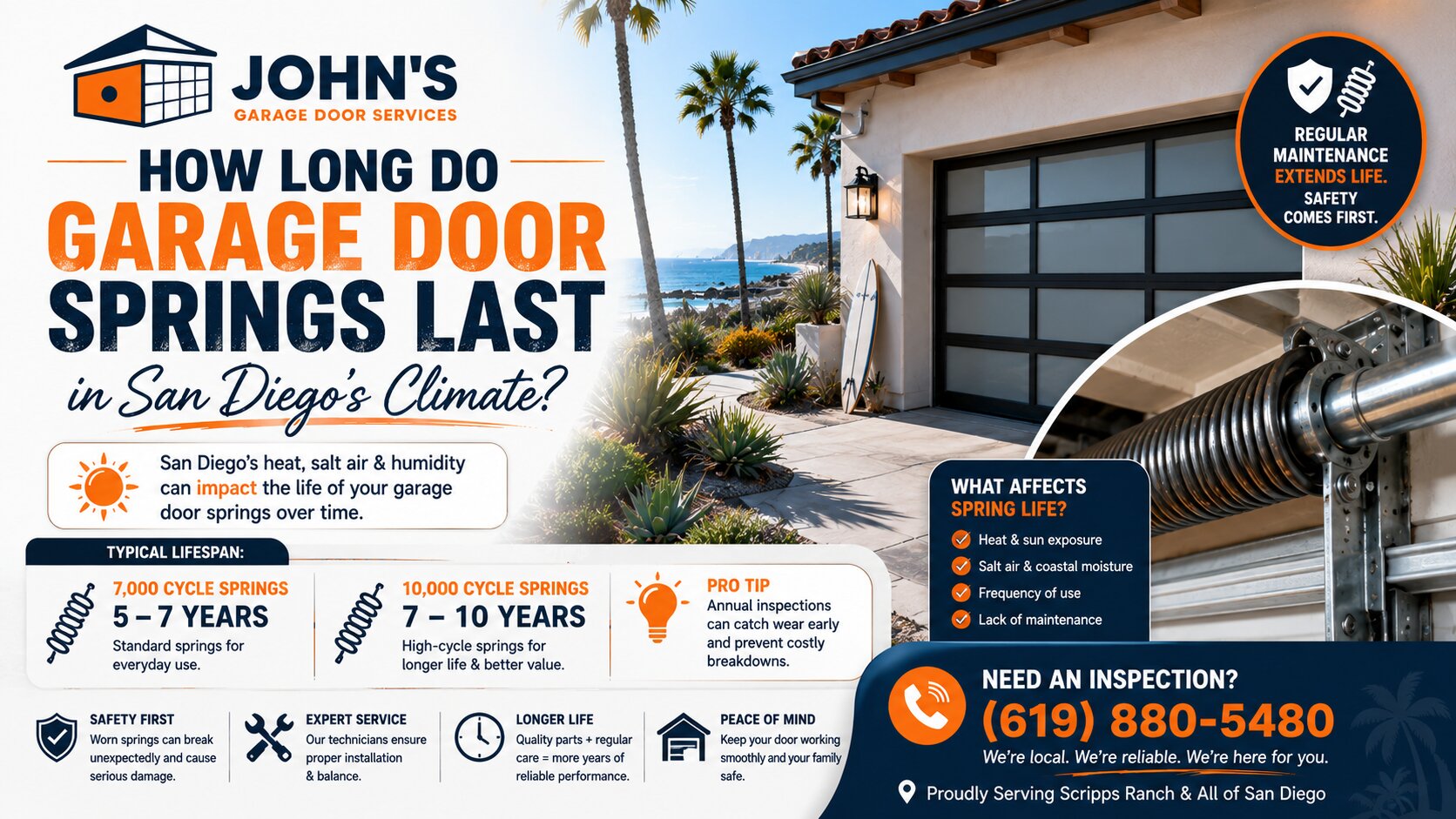
Most garage door springs are rated for 10,000 to 15,000 cycles, where one cycle equals opening and closing your door once. For the average San Diego family that uses their garage door three to four times daily, this translates to approximately seven to ten years of service.
However, I rarely see springs that perform exactly as rated. Real-world conditions in San Diego County affect these numbers significantly, and I’ll explain why in the sections below.
How San Diego’s Climate Affects Spring Longevity
We’re fortunate to live in one of the best climates in the country, and that actually helps your garage door springs last longer. Our mild temperatures mean springs aren’t constantly expanding and contracting from extreme heat and cold like they would in other parts of the country.
The marine layer along the coast is a different story. If you live in coastal areas like Point Loma or La Jolla, salt air accelerates rust formation on standard springs. I’ve seen coastal springs fail at five or six years when inland springs from the same manufacturer last the full ten.
In inland communities like Santee or El Cajon, summer heat above 100 degrees can stress springs differently. The metal becomes more pliable in extreme heat, which can lead to premature wear if your door is heavily used during hot afternoons.
What Shortens Spring Life in Real-World Use?
Usage frequency is the biggest factor I see affecting spring lifespan. If you have teenagers driving in and out multiple times daily, or if you use your garage as a primary entry point, you’re consuming those rated cycles much faster than average.
Poor maintenance accelerates spring failure dramatically. Springs need lubrication every six months to reduce friction and prevent rust. I’ve replaced springs at three years simply because they were never maintained, while well-maintained springs in similar homes lasted twelve years.
The quality of the original springs matters enormously. Builder-grade springs installed in many San Diego tract homes are often the cheapest available. When I replace springs, I always recommend upgrading to Stainless Steel Garage Door Hardware or commercial-grade torsion springs rated for 25,000 to 30,000 cycles.
How Do I Know When My Springs Are Wearing Out?
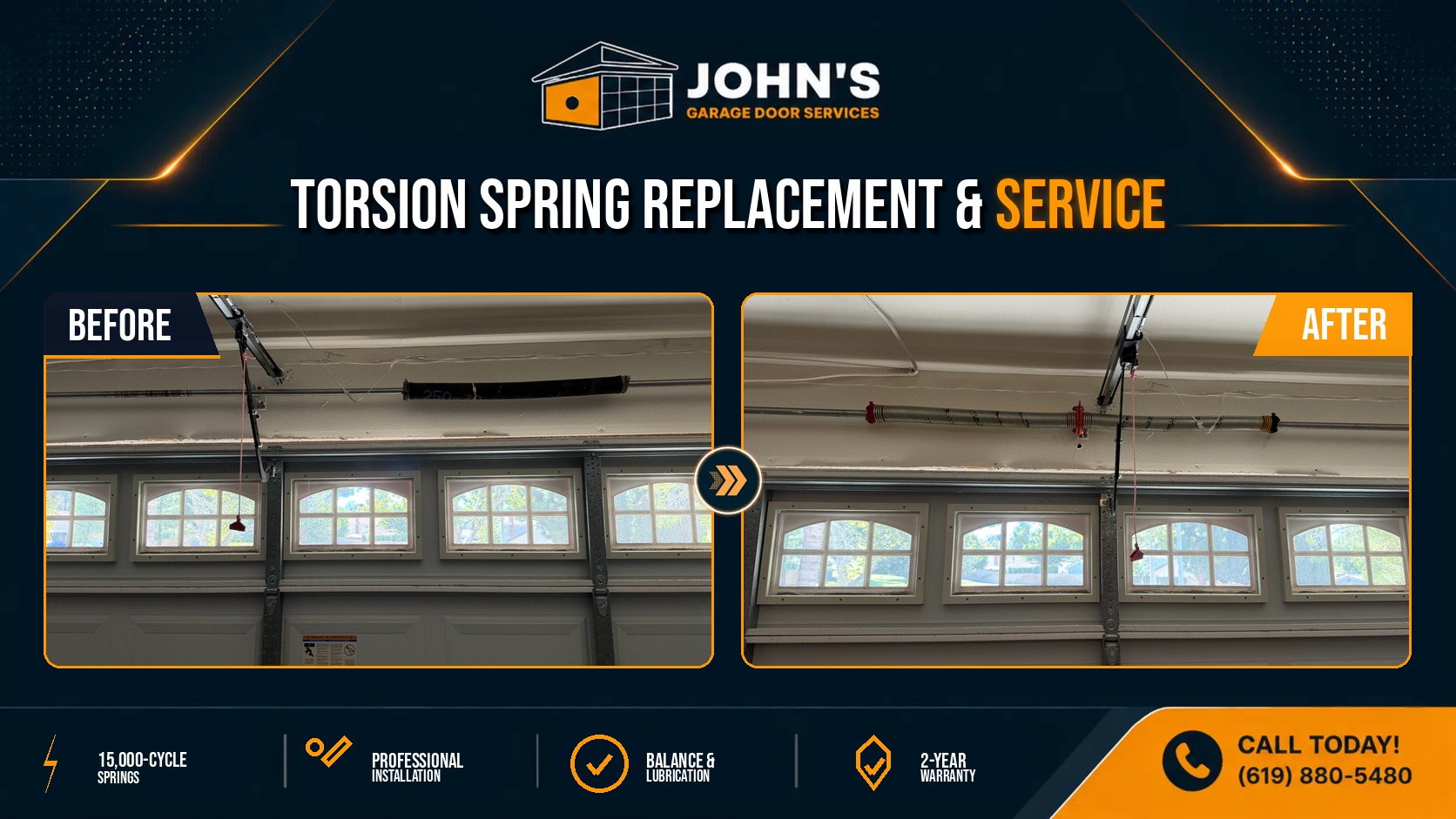
Springs don’t usually break without warning. You’ll notice your door becoming harder to lift manually, or it may not stay open when raised halfway. These are clear signs the springs are losing tension.
Visual inspection tells me a lot during service calls. I look for gaps or separation in the spring coils, rust accumulation, or visible stretching. If I see a quarter-inch gap between coils on a torsion spring, replacement is imminent.
Listen to your door carefully. A loud bang when the door is closed often means a spring just broke. Grinding or squeaking during operation suggests the springs are struggling and likely near the end of their service life.
Can I Extend My Spring Lifespan?
Absolutely, and it’s simpler than most homeowners think. I recommend lubricating your springs twice yearly with a silicone-based spray lubricant. This single maintenance step can add two to three years to spring life.
Keep your garage door balanced. An unbalanced door puts uneven stress on springs, causing premature failure.
Test balance by disconnecting the opener and manually lifting the door halfway. It should stay in place without drifting up or down.
If you’re in a coastal area, consider upgrading to powder-coated or galvanized springs during replacement. These corrosion-resistant options cost slightly more upfront but often last twice as long in salty air conditions, similar to how Garage Door Replacement Costs In San Diego vary based on material quality and longevity.
Partner With Local Experts Who Know San Diego
Spring replacement isn’t a DIY project. These components are under extreme tension and can cause serious injury or death if mishandled. I’ve seen the aftermath of attempted DIY spring repairs, and it’s never worth the risk.
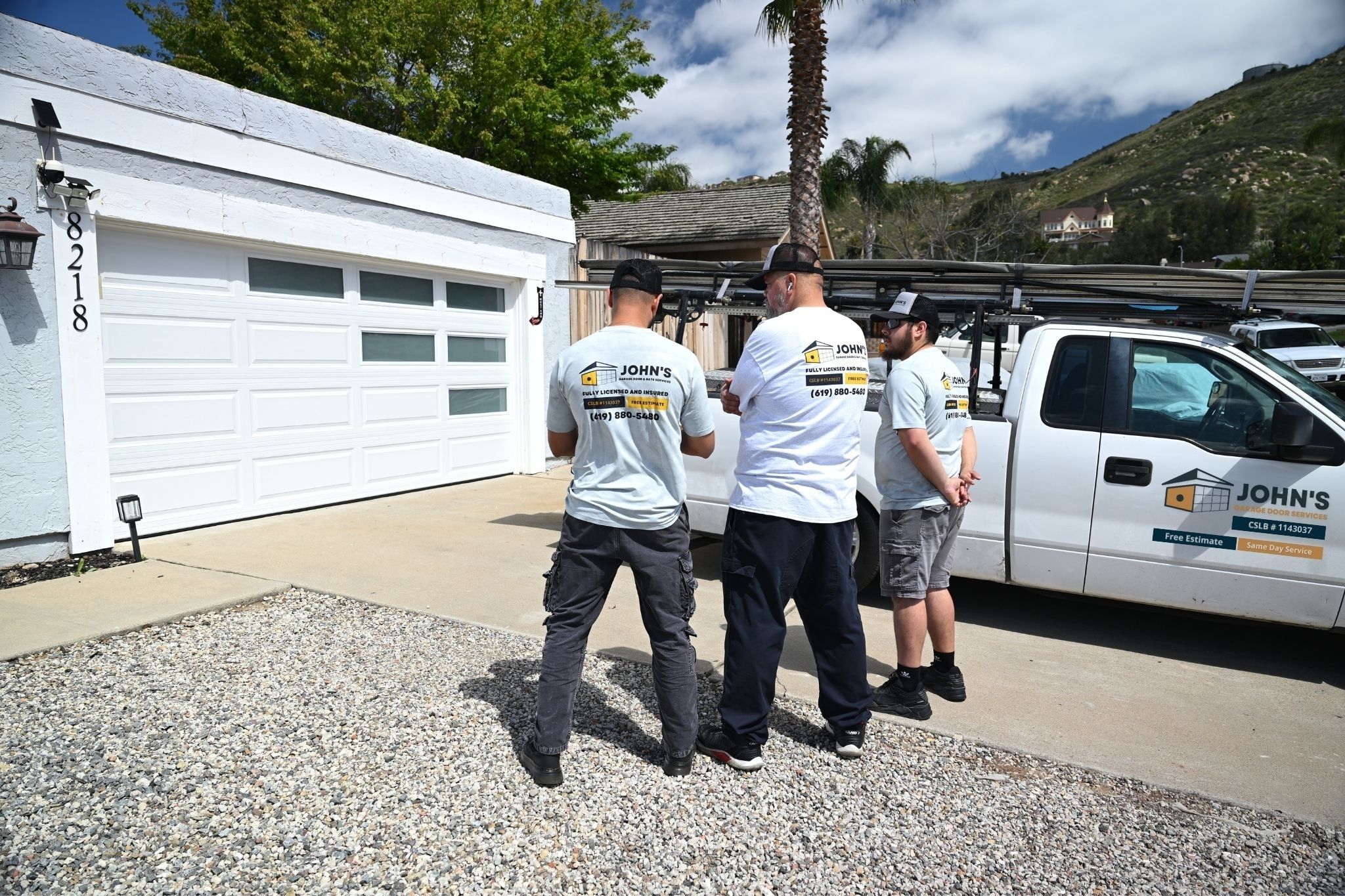
Our team at John’s Garage Door has served San Diego communities for years, and we understand how local conditions affect your garage door system. We offer free spring inspections with our Garage Door Springs service and can tell you exactly how much life remains in your current springs.
Don’t wait for a complete failure that leaves you stuck inside or outside your garage. Get A Quote today for a professional assessment and enjoy the peace of mind that comes with properly functioning, safely installed springs.
John Josef – 15 Years of Garage Door Expertise – John’s Garage Door Services, Locally Owned and Operated. We provide top-quality garage door repair, installation, and maintenance with a strong commitment to honest, reliable customer service.