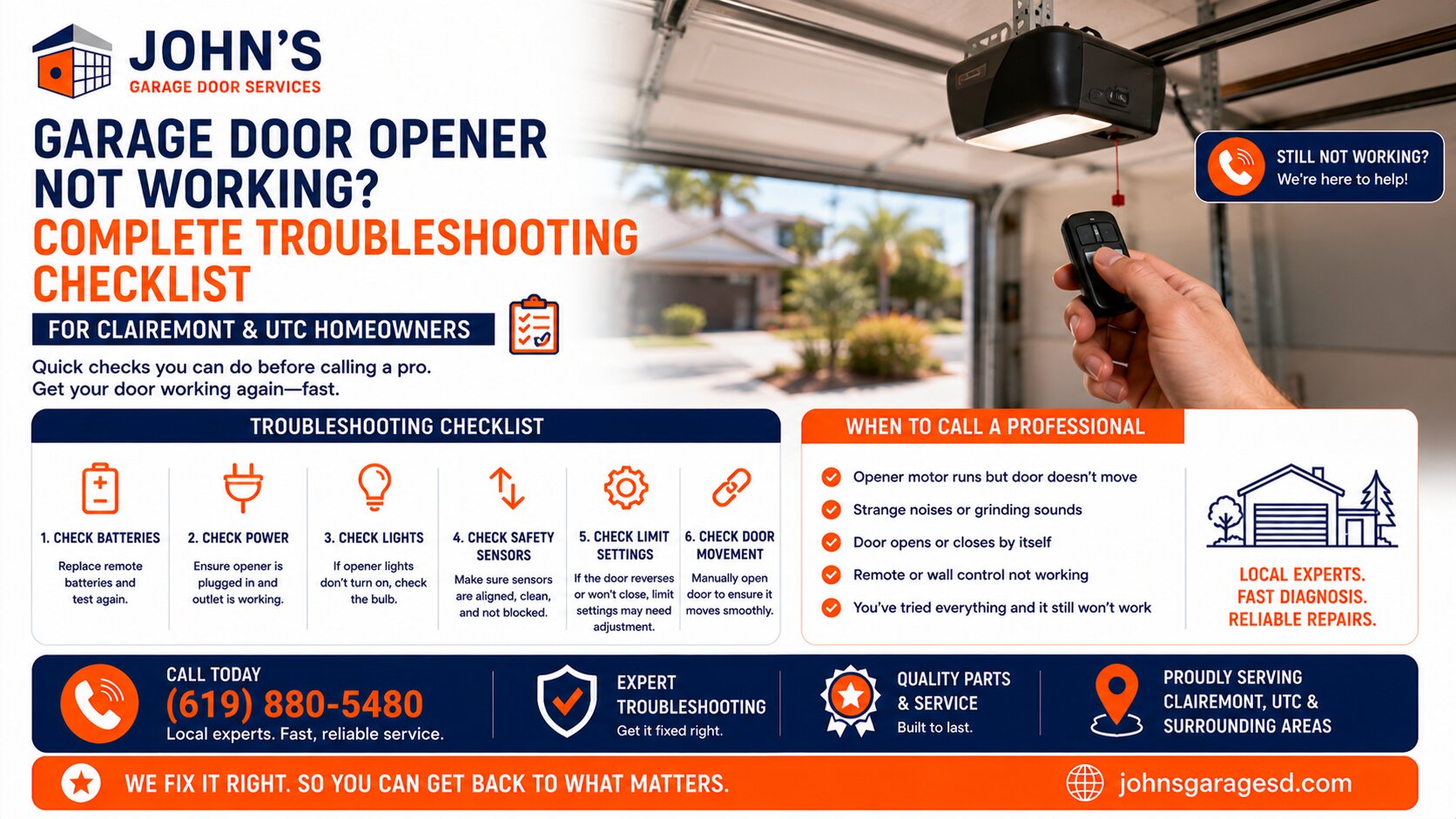
Flashing lights on your garage door safety sensors typically indicate a misalignment, obstruction, or wiring issue preventing the door from closing properly. These photo-eye sensors create an invisible beam across your garage door opening, and when that beam is interrupted or the sensors can’t communicate, the LED lights flash to warn you of a safety problem. Understanding what the flashing pattern means and following a systematic troubleshooting approach will help you resolve most sensor issues without professional assistance.
Understanding Sensor LED Error Codes
Most garage door sensors use color-coded LED lights to communicate their status. A steady green light on both sensors means they’re aligned and working correctly, while flashing patterns indicate specific problems. Red or amber flashing typically signals misalignment or an obstruction blocking the sensor beam.
Some sensor models use different color combinations, so consult your opener’s manual for manufacturer-specific codes or check out our Garage Door Blog for more troubleshooting tips.
Step-by-Step Sensor Realignment Process
Common Obstruction and Environmental Issues
Obstructions aren’t always visible at eye level. Check for items stored near the door opening, hanging tools, or even accumulated leaves and debris in the sensor’s line of sight. Direct sunlight can also overwhelm the sensor’s receiver, causing intermittent flashing during certain times of day.
Temperature and moisture can affect sensor performance as well. Condensation on the lenses or extreme temperature swings may temporarily disrupt communication between units. Allow sensors to acclimate or wipe away moisture before assuming a more serious problem.
When Flashing Indicates Wiring or Component Failure
If realignment and cleaning don’t resolve the flashing, inspect the sensor wiring for damage. Look for frayed wires, loose connections at the opener motor unit, or staples that may have punctured the wire insulation during installation. Rodent damage is surprisingly common in garage environments.
Check the wire connections at both the sensors and the opener terminal. Corroded or loose terminals can cause intermittent power delivery. The following symptoms suggest component failure requiring replacement:
If you’re experiencing related issues like Why Does My Garage Door Reverse After Hitting The Floor?, the sensor system may also be involved.
John Josef – 15 Years of Garage Door Expertise – John’s Garage Door Services, Locally Owned and Operated. We provide top-quality garage door repair, installation, and maintenance with a strong commitment to honest, reliable customer service.