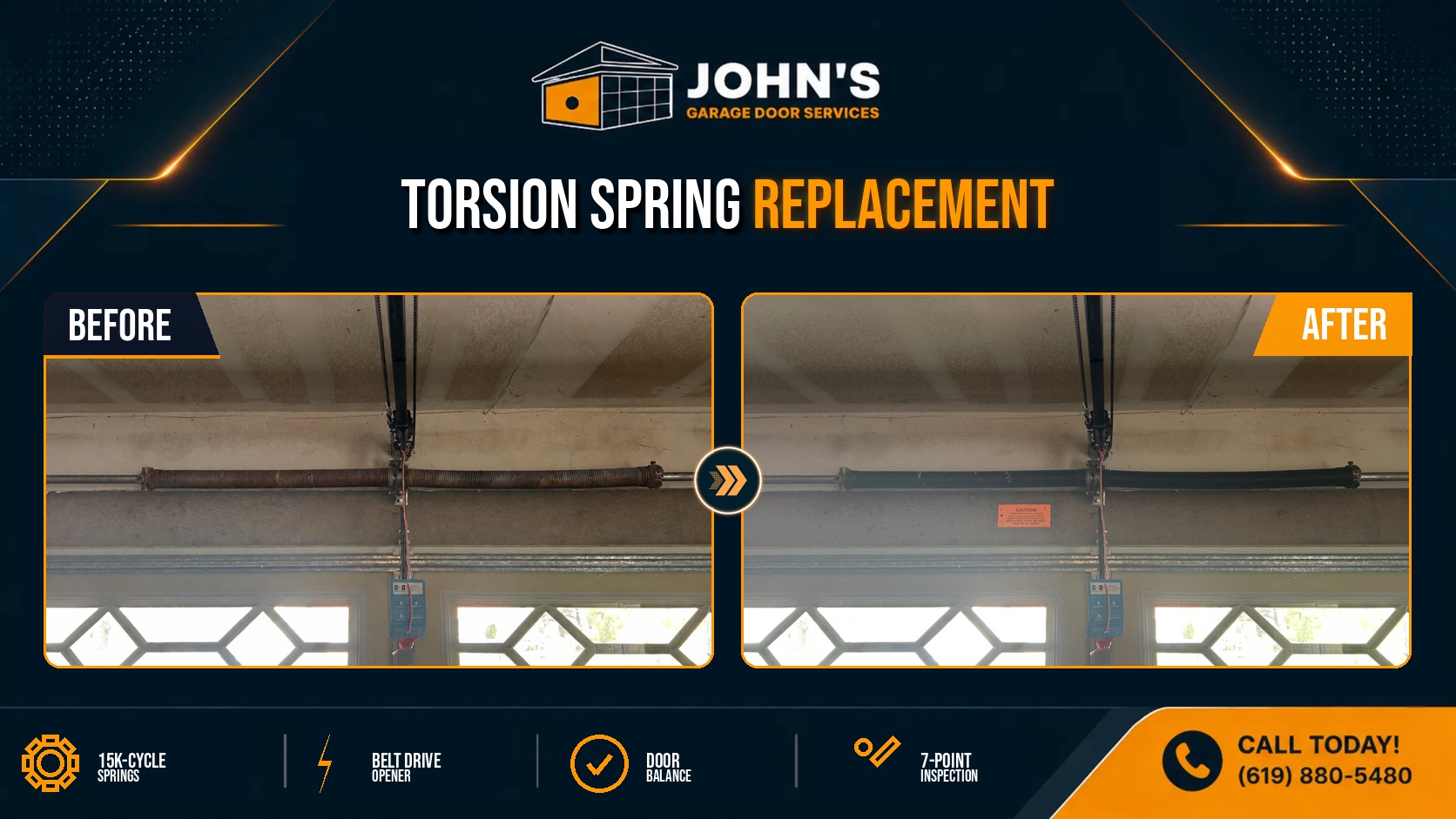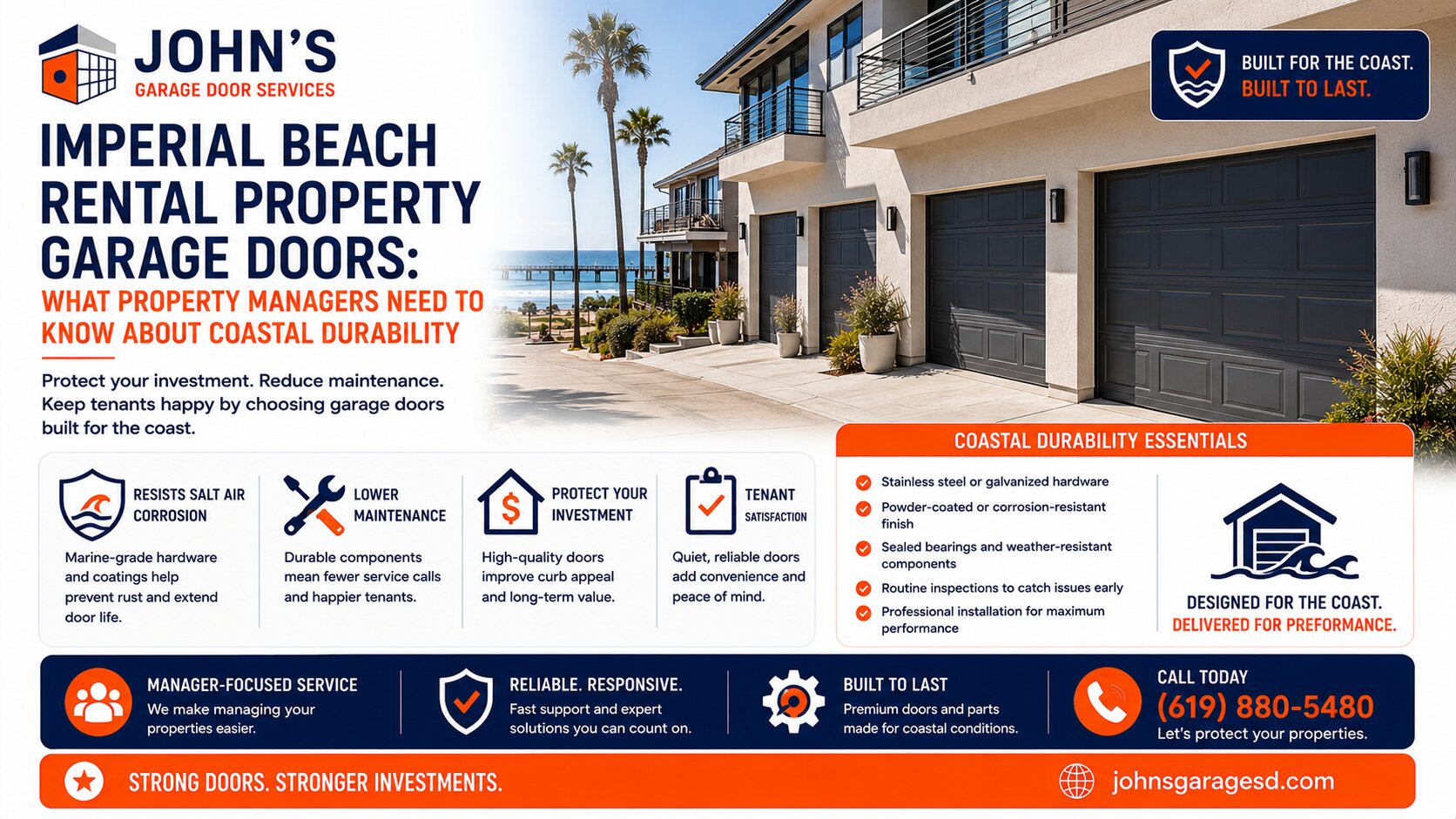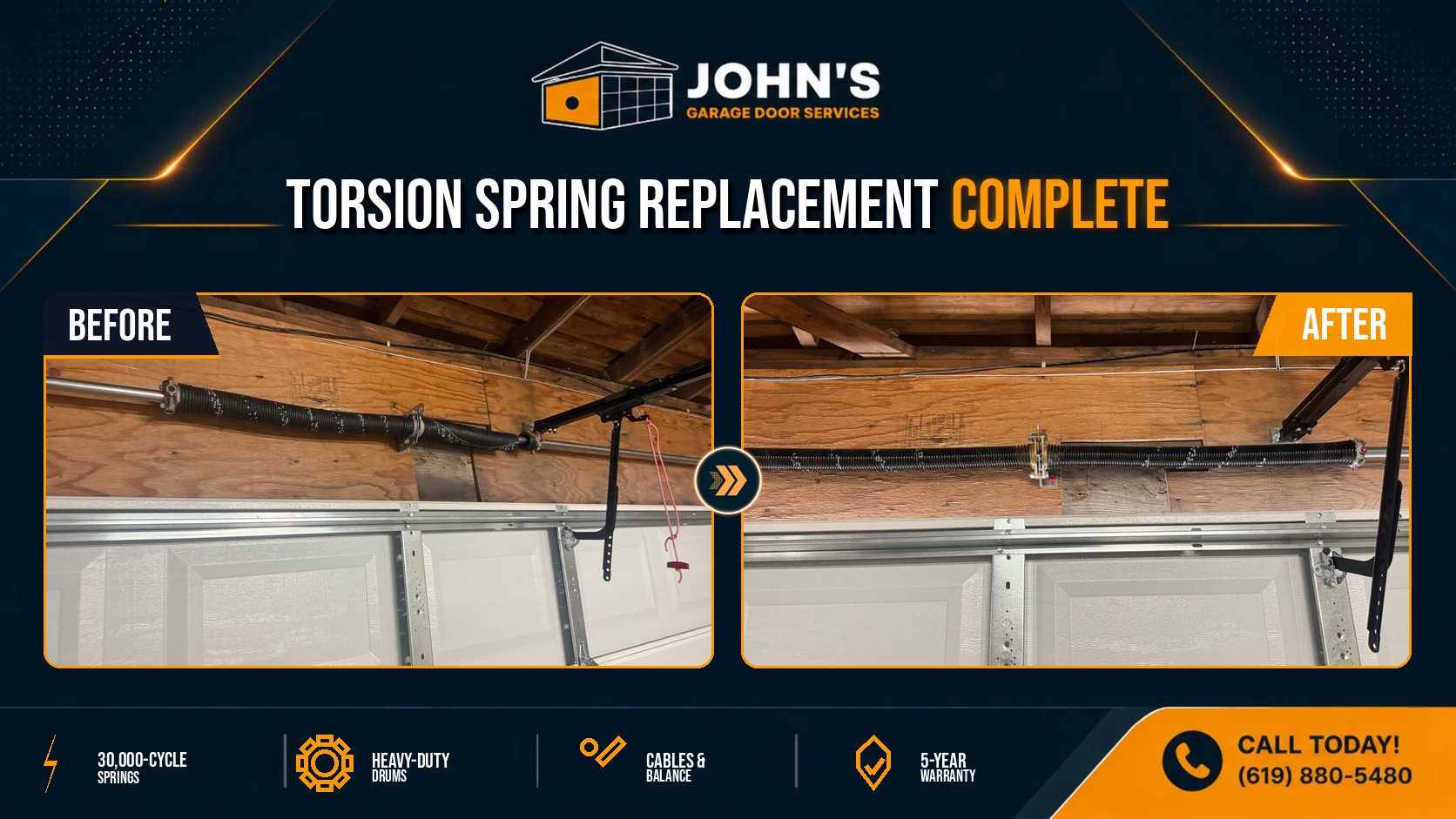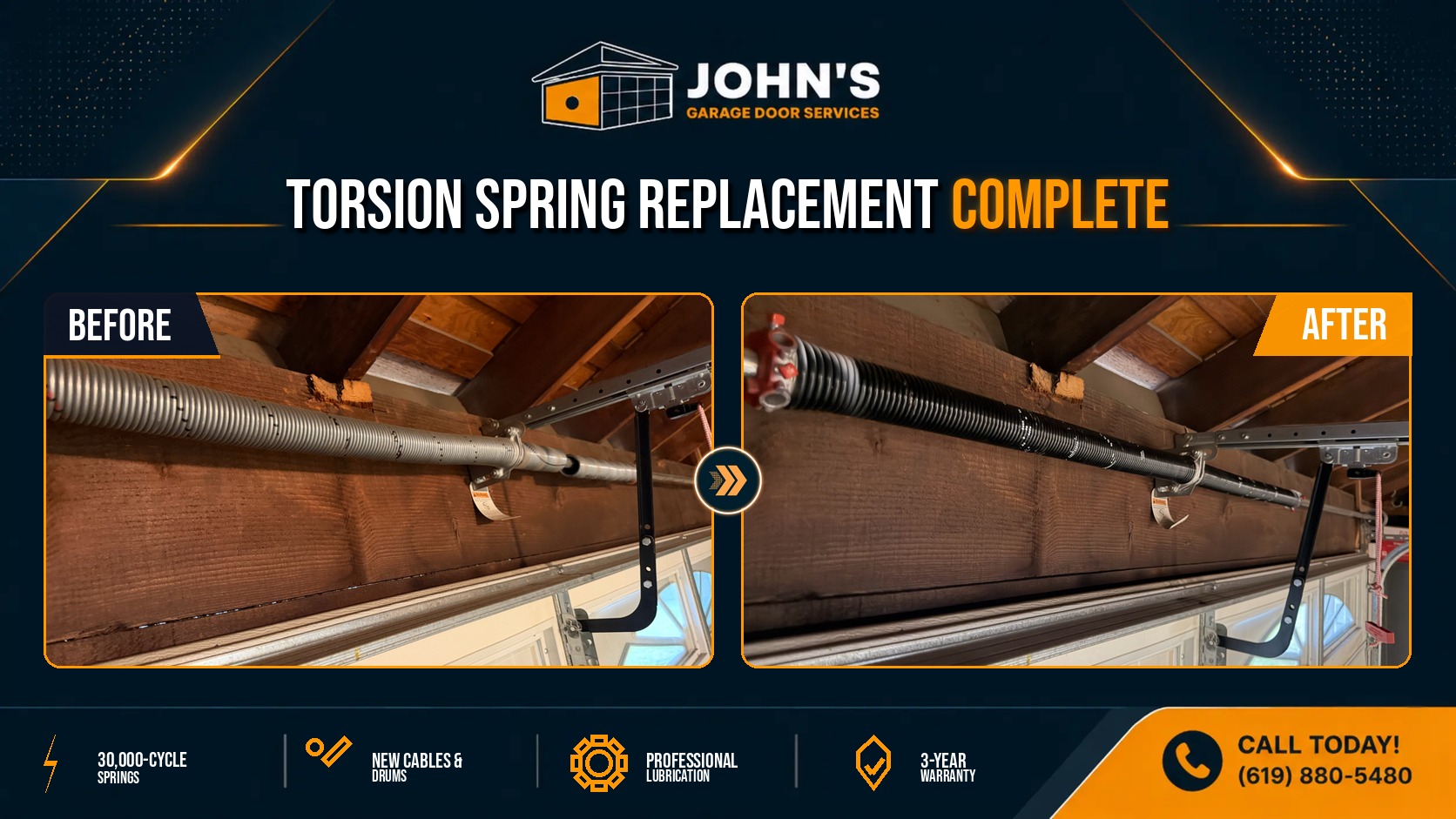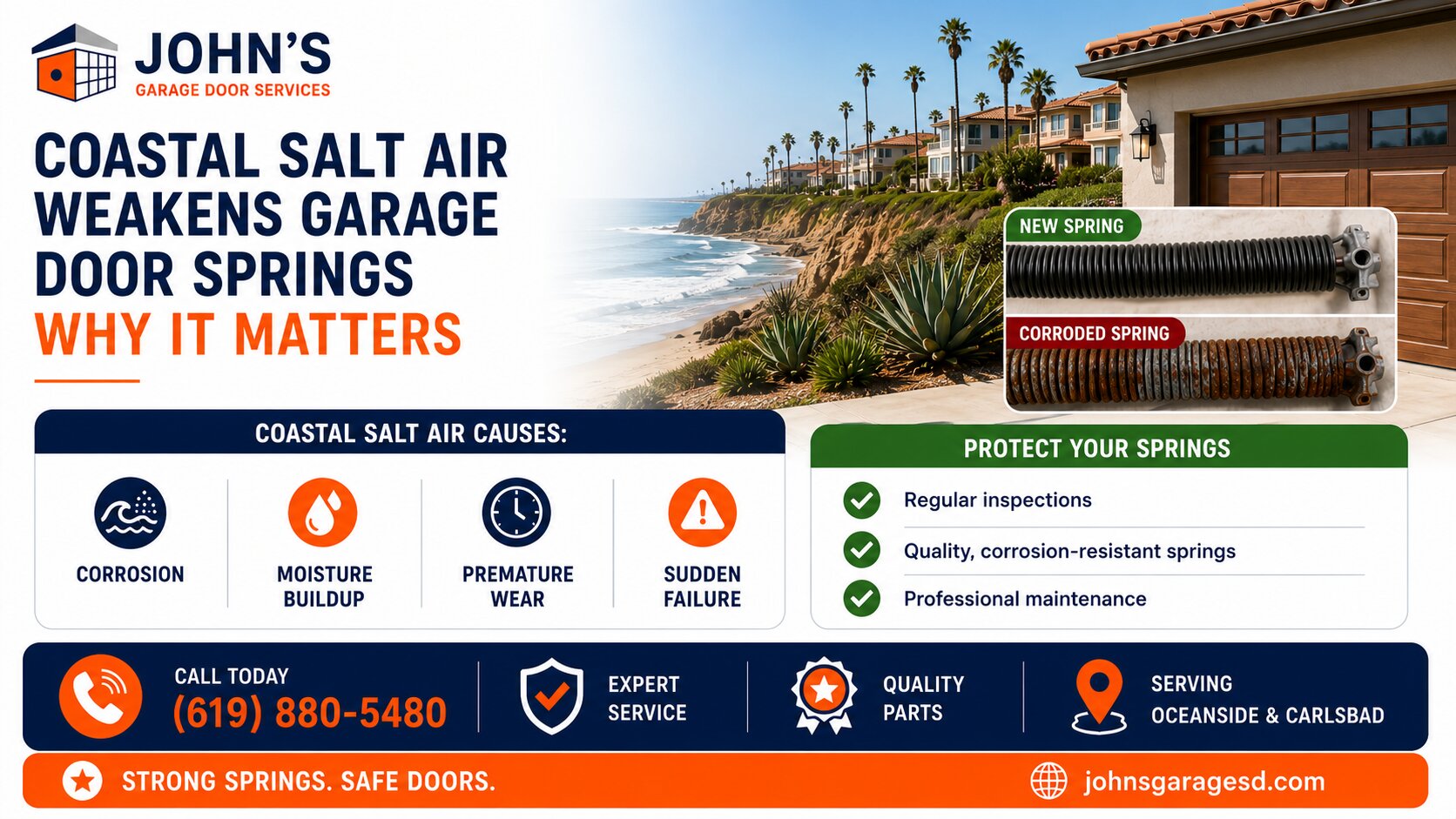
After servicing garage doors along the San Diego coast for years, I’ve seen the same pattern repeat itself countless times. Homeowners in Oceanside and Carlsbad call us with Broken Torsion Springs, surprised that their garage door system failed after just three or four years when they expected seven to ten years of service life. The culprit isn’t defective springs or poor installation.
It’s the salt-laden marine air that blankets our coastal communities every morning and evening, silently attacking the metal components of your garage door system.
How Does Salt Air Damage Torsion Springs?
Torsion springs fail prematurely in coastal areas because salt particles suspended in the marine layer settle on metal surfaces and attract moisture. This creates an electrochemical reaction that causes rust to form much faster than in dry, inland environments. The marine layer in Oceanside and Carlsbad contains microscopic sodium chloride particles that act as a catalyst for corrosion.
When these particles land on your garage door springs, they create tiny corrosion cells that eat away at the steel from the outside in. What makes this particularly damaging is that torsion springs are wound tightly under tremendous tension.
As rust forms on the surface, it creates microscopic pits and cracks in the steel. These imperfections become stress concentration points where metal fatigue accelerates dramatically.
The Humidity Factor in Southern California Coastal Zones
Warning Signs Your Coastal Springs Are Failing
Rust Prevention Strategies That Actually Work
How Often Should Coastal Properties Have Spring Inspections?
Homes within two miles of the California coastline should have professional garage door inspections every 12 months, not the 18 to 24 months we recommend for inland properties. This shortened interval allows us to catch corrosion damage before it leads to catastrophic spring failure. During these inspections, we look for surface rust, check spring tension, examine bearing plates for wear, and apply fresh lubricant.
We also inspect the cables, rollers, and other metal components that face the same corrosion challenges. The cost of an annual inspection is minimal compared to the emergency service call you’ll pay when a corroded spring snaps and leaves you unable to open your garage door.
For more information on Salt Air And Garage Door Springs Protection, you can read our additional coastal protection resources.
Get Expert Coastal Garage Door Service
If you live in Oceanside, Carlsbad, or anywhere along the San Diego coast, don’t wait until your springs fail. Our team at John’s Garage Door understands the unique challenges that salt air creates for garage door systems, and we stock corrosion-resistant components specifically for coastal installations. We’ll inspect your springs, identify any existing corrosion damage, and recommend the best prevention strategy for your specific location.
Contact us today to schedule your coastal garage door inspection and protect your investment from San Diego’s marine environment. You can also visit our Garage Door Blog for more maintenance tips and expert advice.
John’s Garage Door Services is fully licensed (CSLB #1143037), insured, and proudly serves the entire San Diego County region. Whether you need emergency spring replacement on the coast in Oceanside, a smart opener setup in Poway, or track alignment in Chula Vista, our techs provide free on-site estimates across the 619, 858, and 760 area codes. Call us 24/7 at 619-880-5480.
John Josef – 15 Years of Garage Door Expertise – John’s Garage Door Services, Locally Owned and Operated. We provide top-quality garage door repair, installation, and maintenance with a strong commitment to honest, reliable customer service.