I’ve been servicing garage doors across San Diego for years, and grinding noises are one of the most common complaints I hear from homeowners. That metallic scraping sound isn’t just annoying. It’s your garage door telling you something needs attention before a minor issue becomes an expensive repair.
Let me walk you through what causes these grinding sounds and what I look for when diagnosing these problems in homes throughout San Diego County.
What Causes Grinding Noises in Garage Doors?
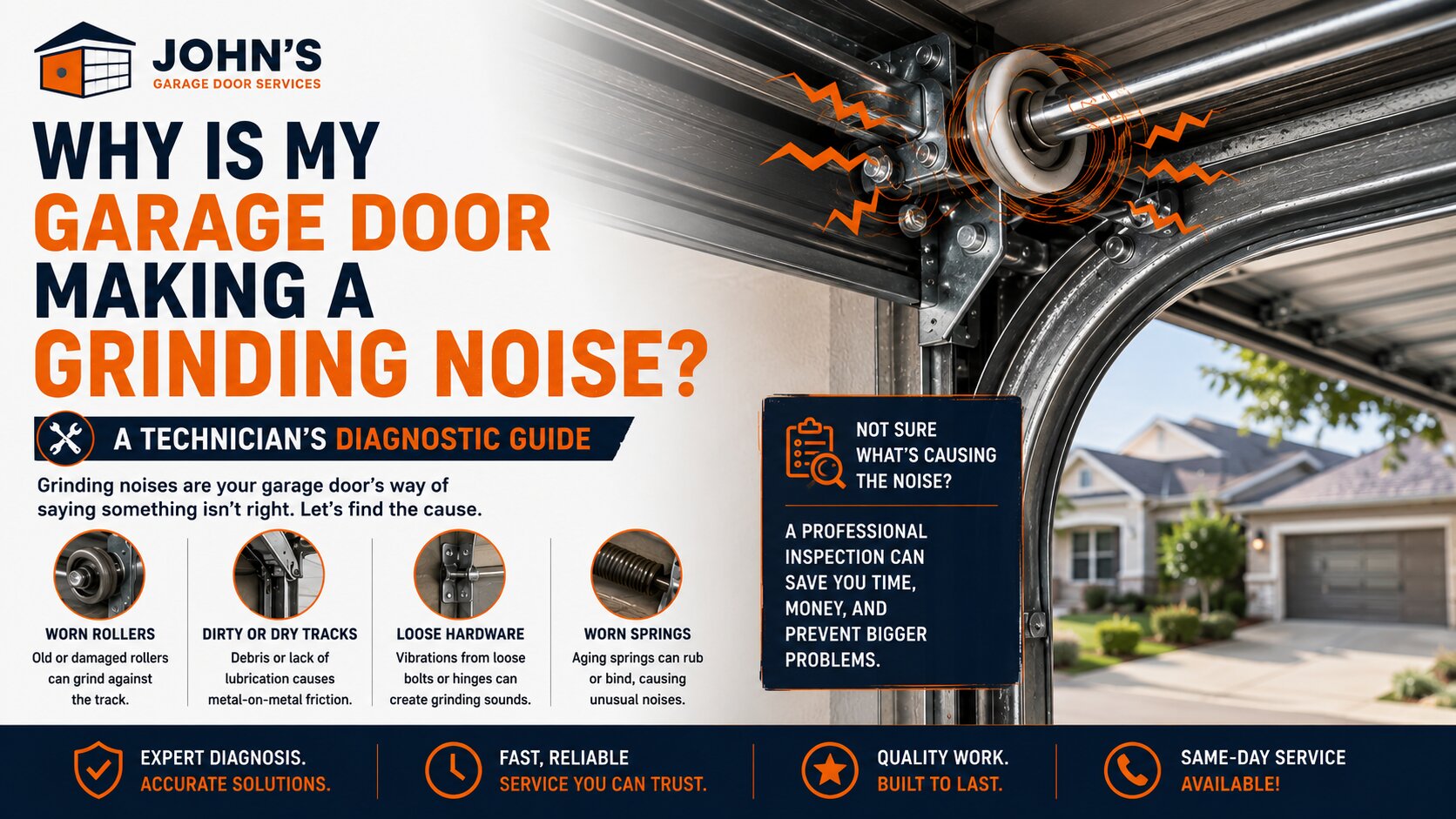
Grinding noises typically come from metal-on-metal contact where there shouldn’t be any. The sound occurs when moving parts lose their lubrication, wear down, or fall out of alignment.
In my experience working throughout Clairemont and Mira Mesa, the culprit is usually one of four components. I’ll start with the most common issues I encounter daily.
Worn Rollers: The Most Common Culprit
Steel rollers without proper bearings create that characteristic grinding sound as they move along the tracks. I see this constantly in San Diego homes, especially in older installations where the original rollers have never been replaced.
When I inspect a grinding door, I check each roller individually by moving it with my hand. If it doesn’t spin freely or feels gritty, it needs replacement.
How Do I Know If My Opener Gears Are Failing?
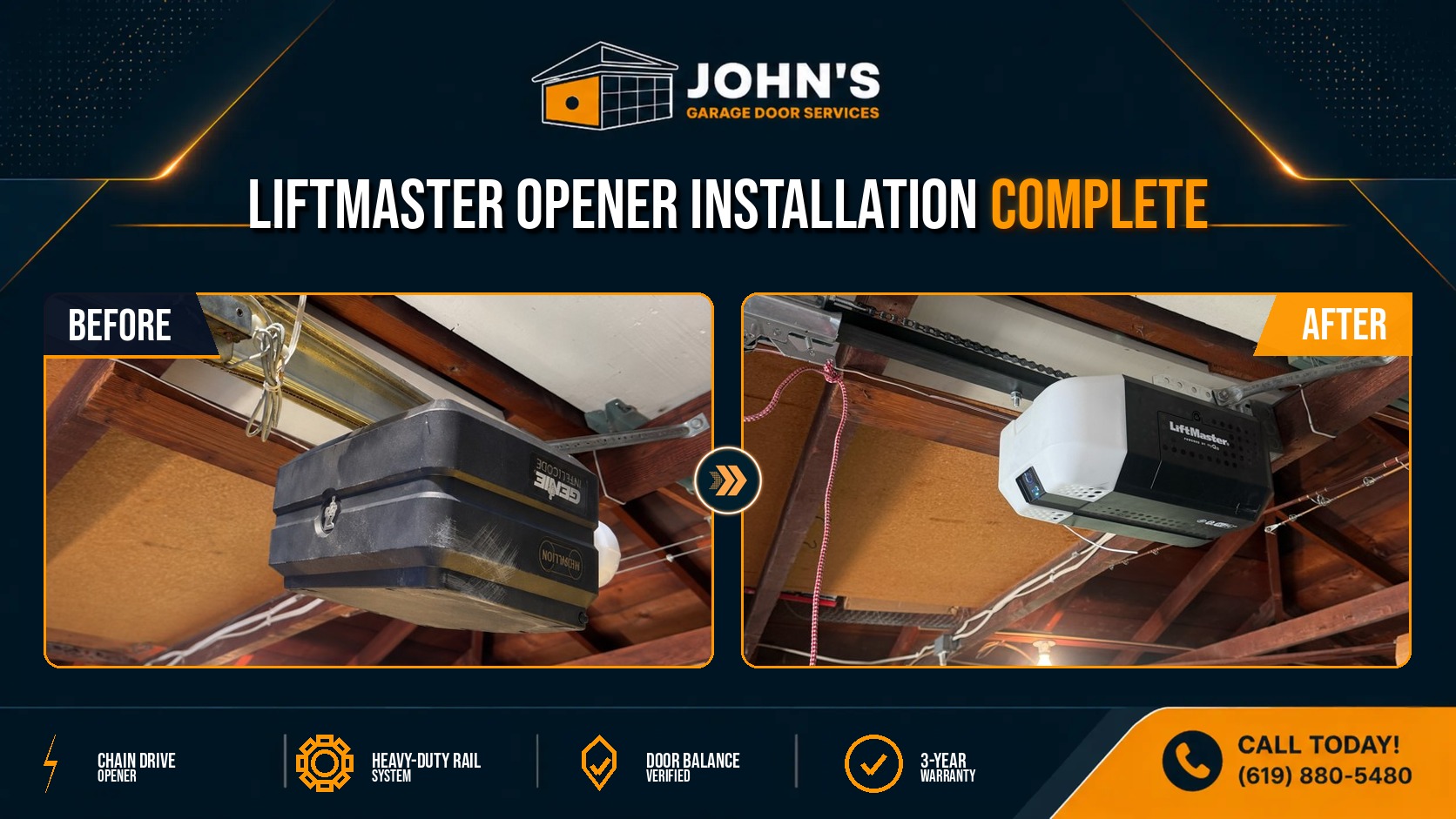
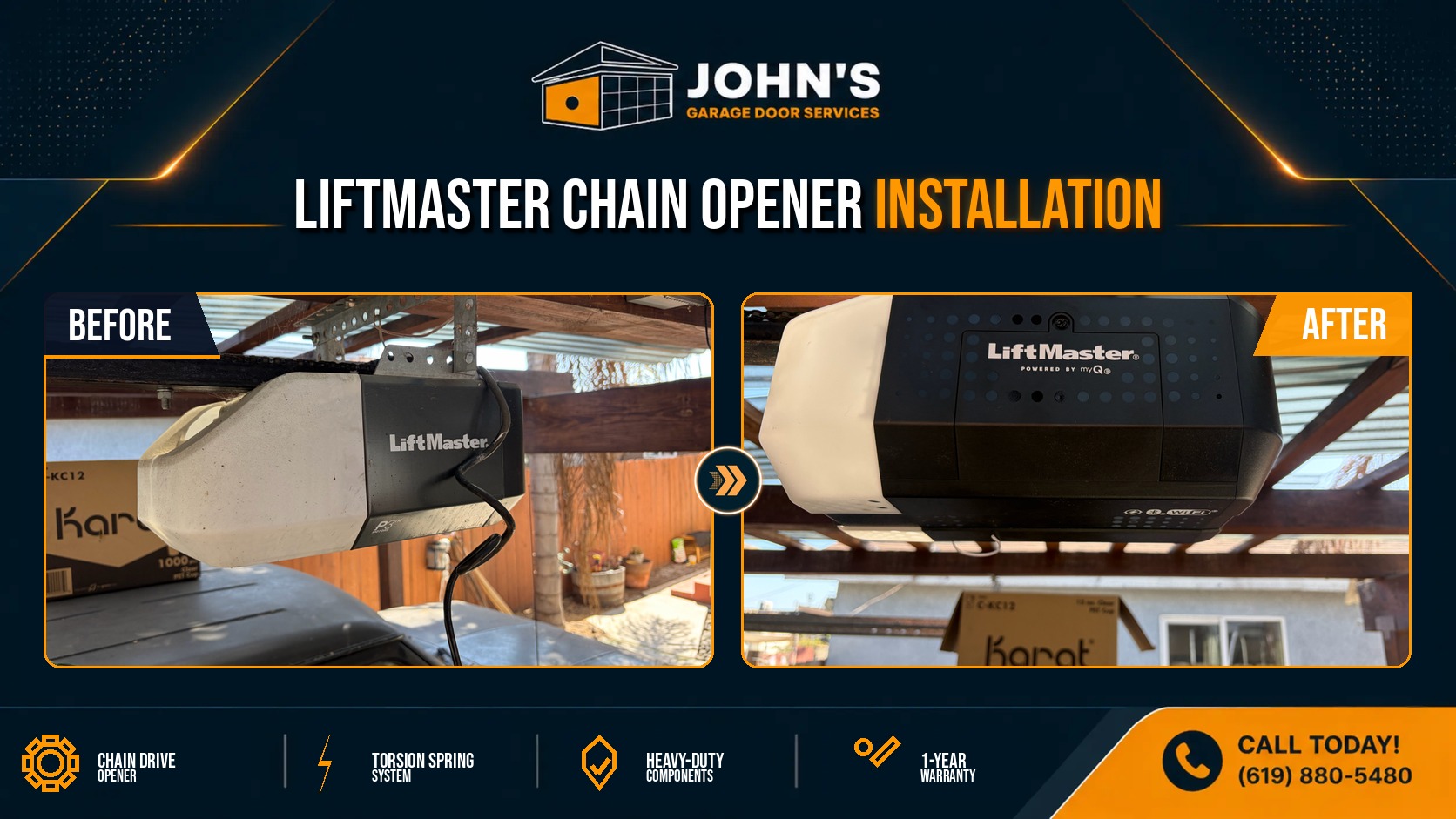
If the grinding sound only occurs when the door is moving with the opener (not when you lift it manually), the problem is inside your opener unit. The main drive gear or worm gear is likely worn or stripped.
This is especially common in older opener models that have cycled through thousands of operations, and if you’re considering a replacement, you might want to explore whether you Can Upgrade Your Current Opener To A Smart Garage Door System.
Track Misalignment and Obstruction Issues
Sometimes what sounds like grinding is actually the door rubbing against misaligned tracks. I’ve found twisted tracks, loose mounting brackets, and even small rocks or debris lodged in the track system throughout Point Loma and La Jolla.
I use a level to check vertical alignment and measure the track spacing at multiple points. Even a quarter-inch misalignment can cause significant noise and premature wear on your rollers.
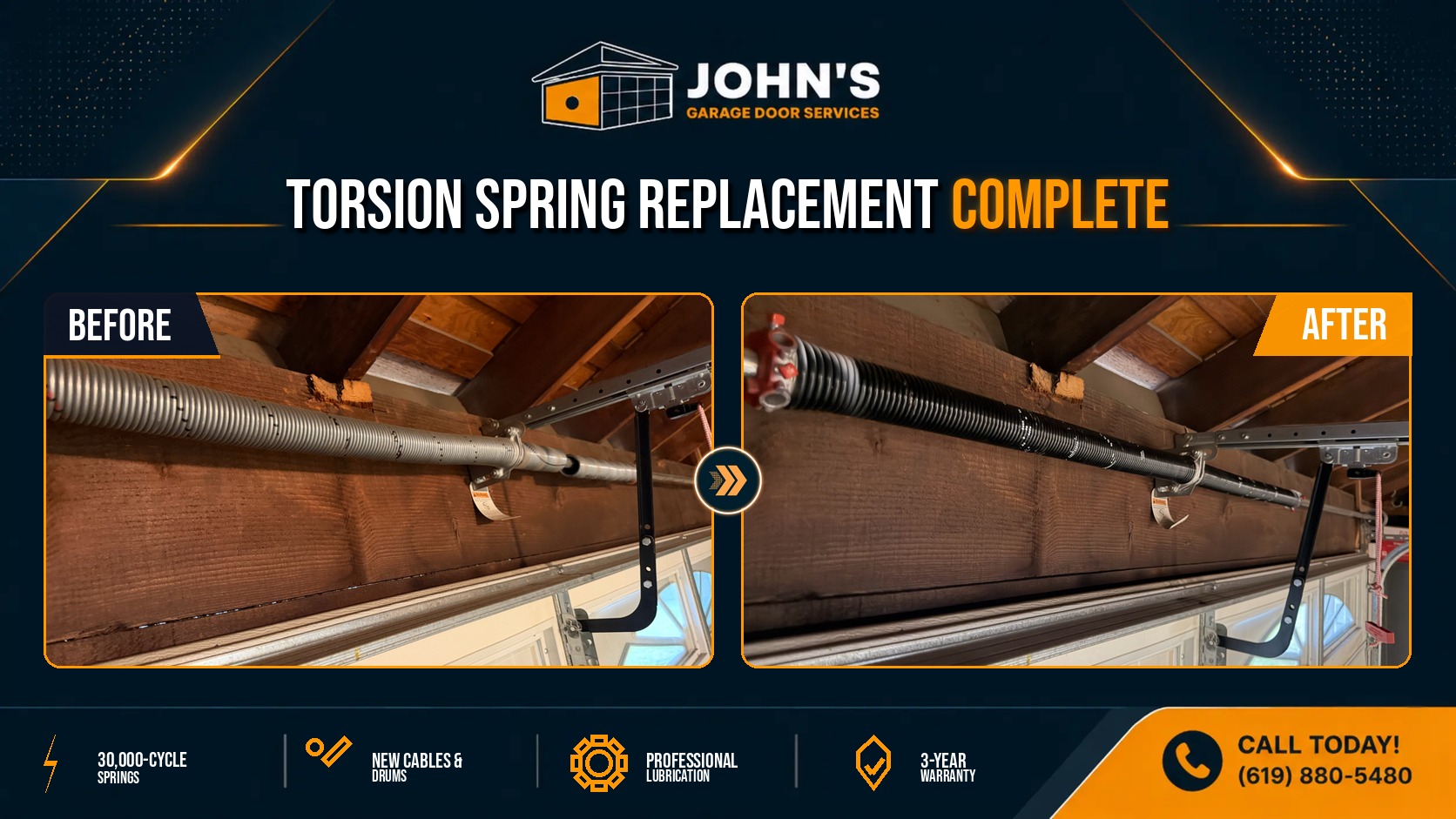
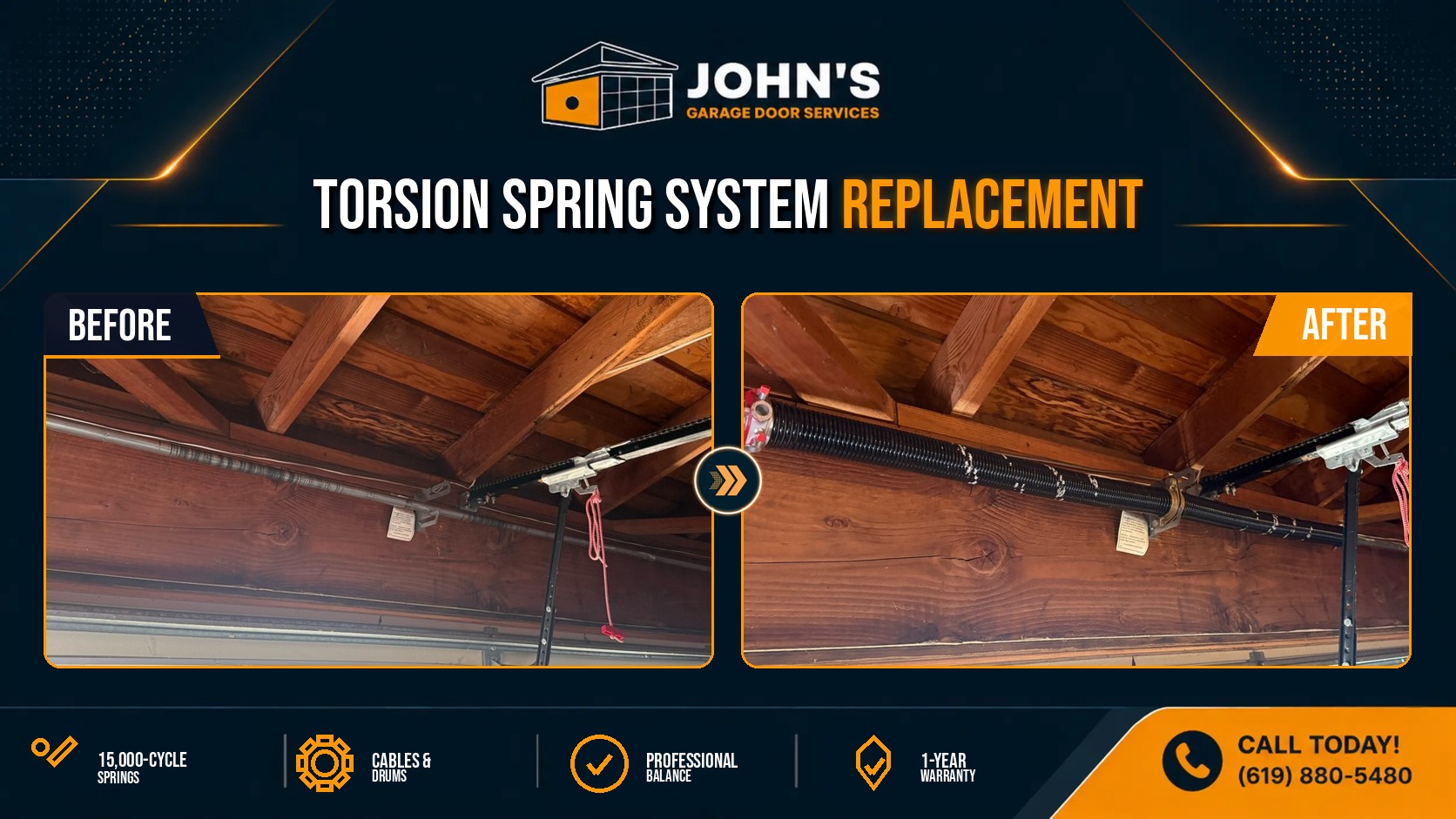
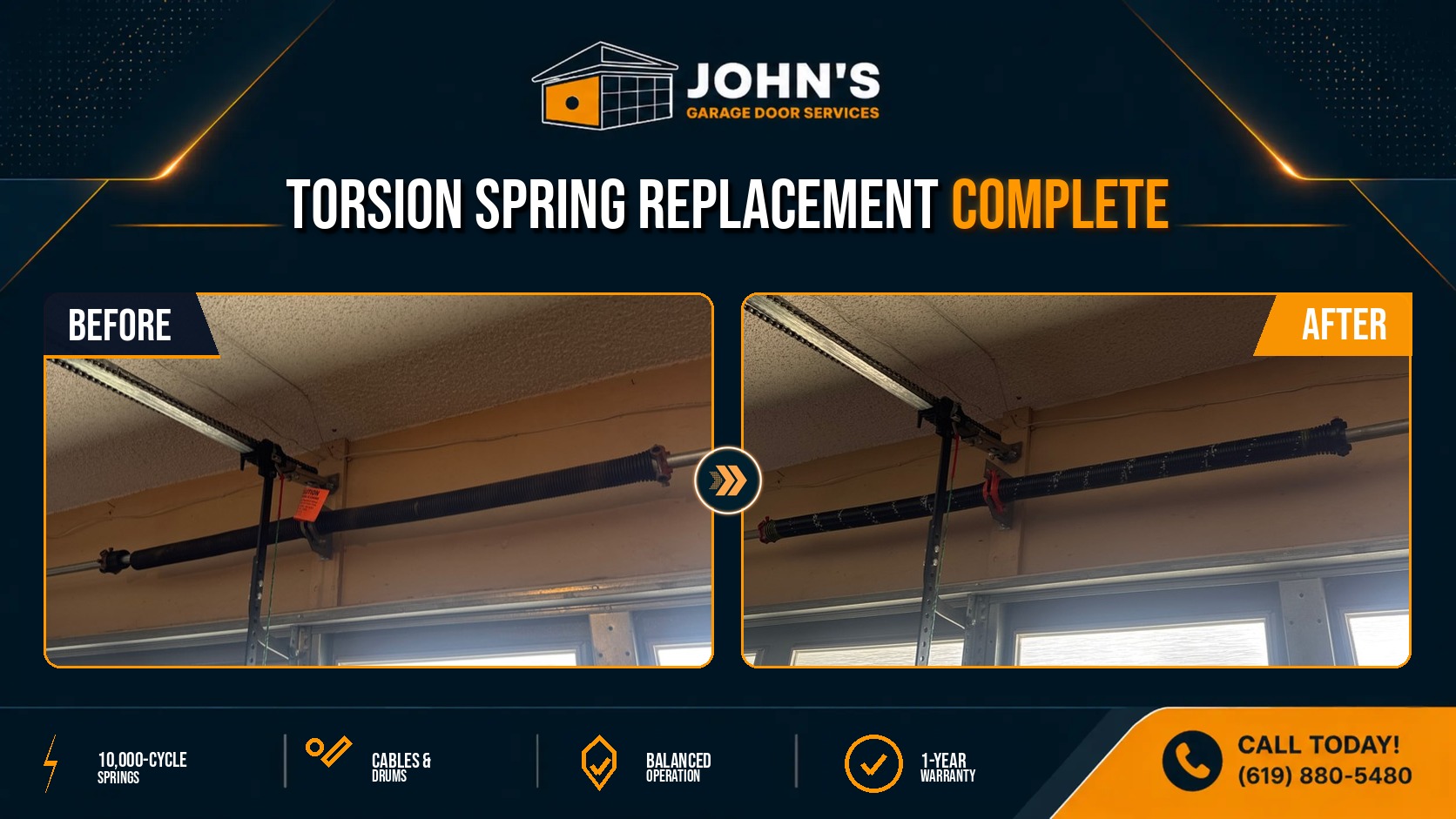
Spring and Hardware Problems
Should I Lubricate or Replace Parts?
Lubrication solves about 30% of the grinding noise cases I respond to in San Diego. I use silicone-based spray lubricant on rollers, hinges, springs, and bearings. WD-40 isn’t a lubricant — it’s a solvent — so I never use it for this purpose.
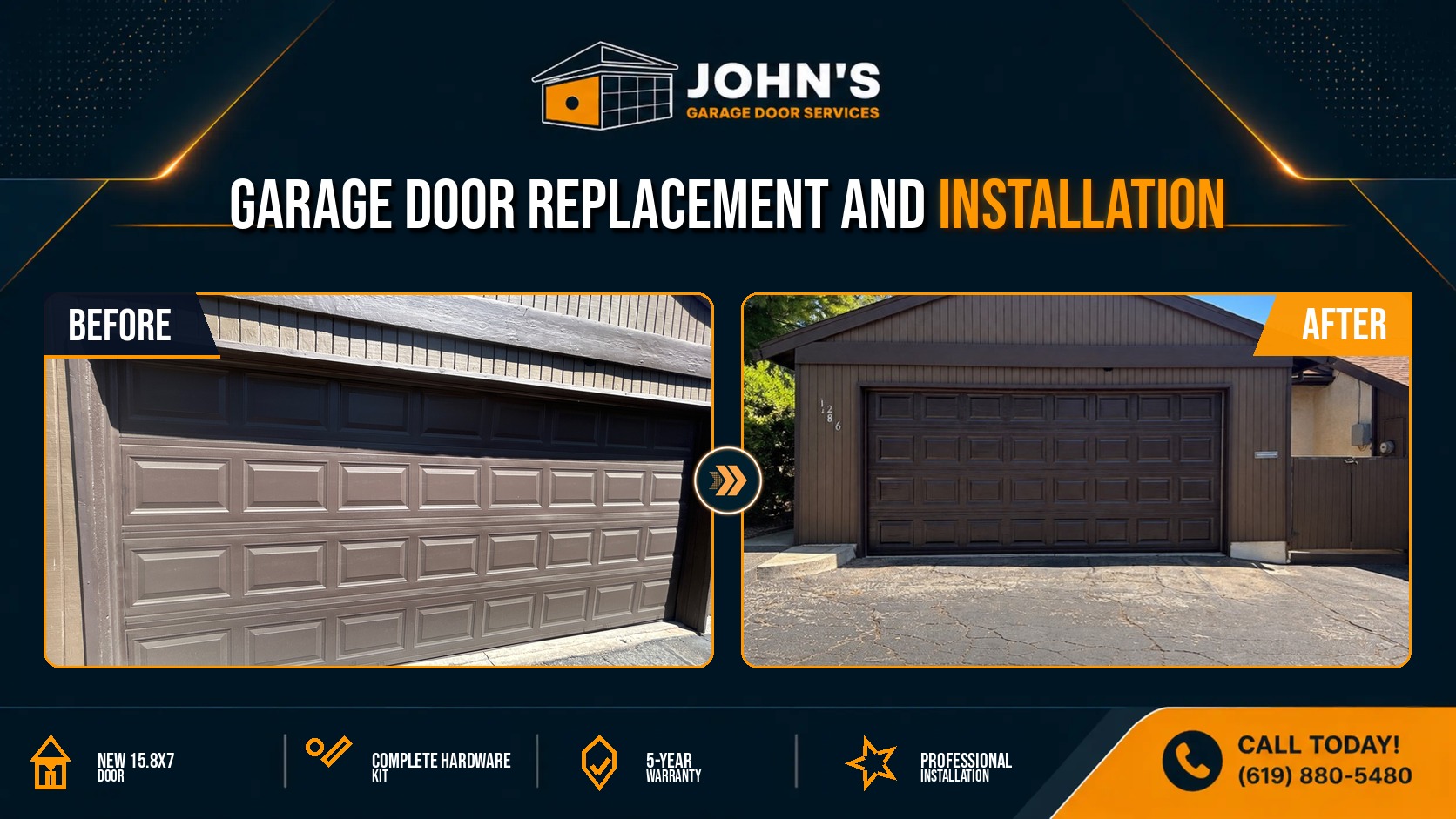
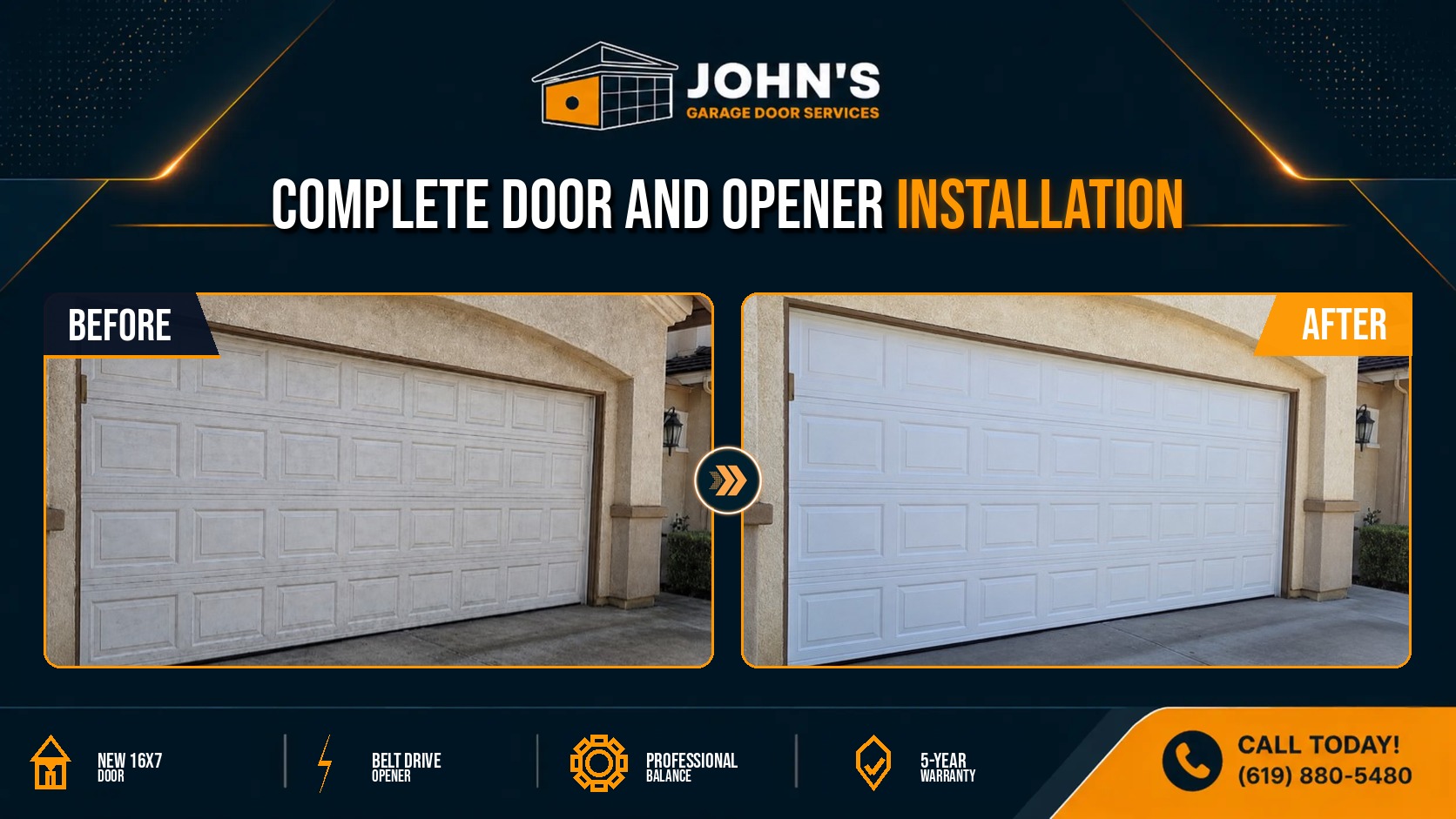
I’m honest with homeowners about when replacement is the smarter investment. When it comes to full door replacement, Choosing The Right Material For Your Residential Garage Door is an important decision.
Get Professional Help for Grinding Garage Doors
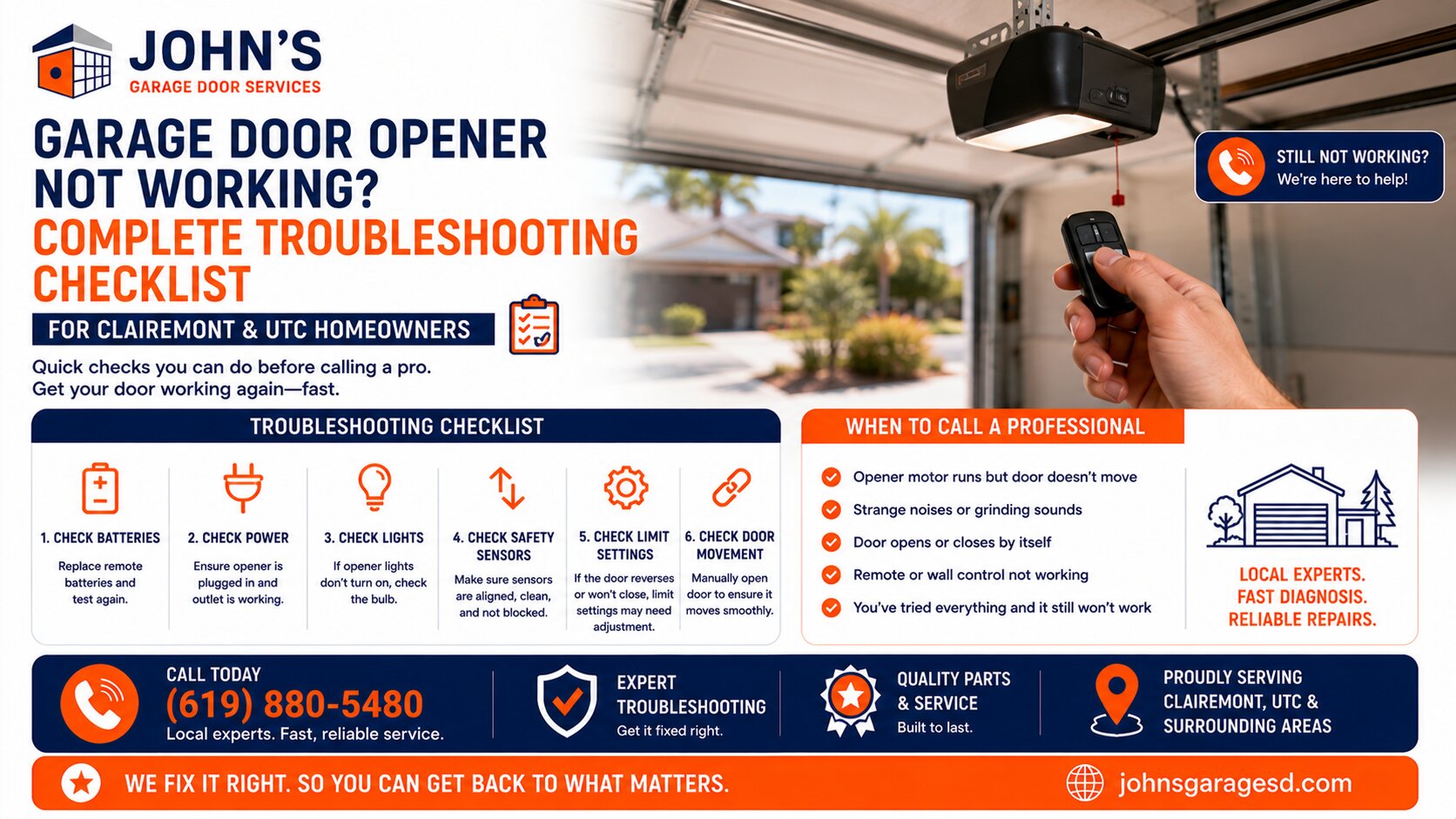
Some grinding noise issues are simple DIY fixes, but others involve spring tension and heavy door components that can be dangerous without proper training and tools. I’ve seen too many injuries from well-meaning homeowners who underestimated the risks.
If you’re hearing grinding from your garage door anywhere in San Diego County, our team at John’s Garage Door can diagnose the exact cause and provide honest recommendations. We’ll show you what’s wrong, explain your options, and get your door running smoothly again.
Contact us today for a thorough inspection and peace of mind, or schedule our Garage Door Maintenance Service to prevent future issues, and Get A Quote for your repair or maintenance needs.
John Josef – 15 Years of Garage Door Expertise – John’s Garage Door Services, Locally Owned and Operated. We provide top-quality garage door repair, installation, and maintenance with a strong commitment to honest, reliable customer service.