I’ve diagnosed hundreds of slow-moving garage doors throughout San Diego County, and homeowners always ask the same question: “Why did this happen so suddenly?” The truth is, slow garage door movement rarely happens overnight. It’s usually the result of gradual wear that finally reaches a tipping point.
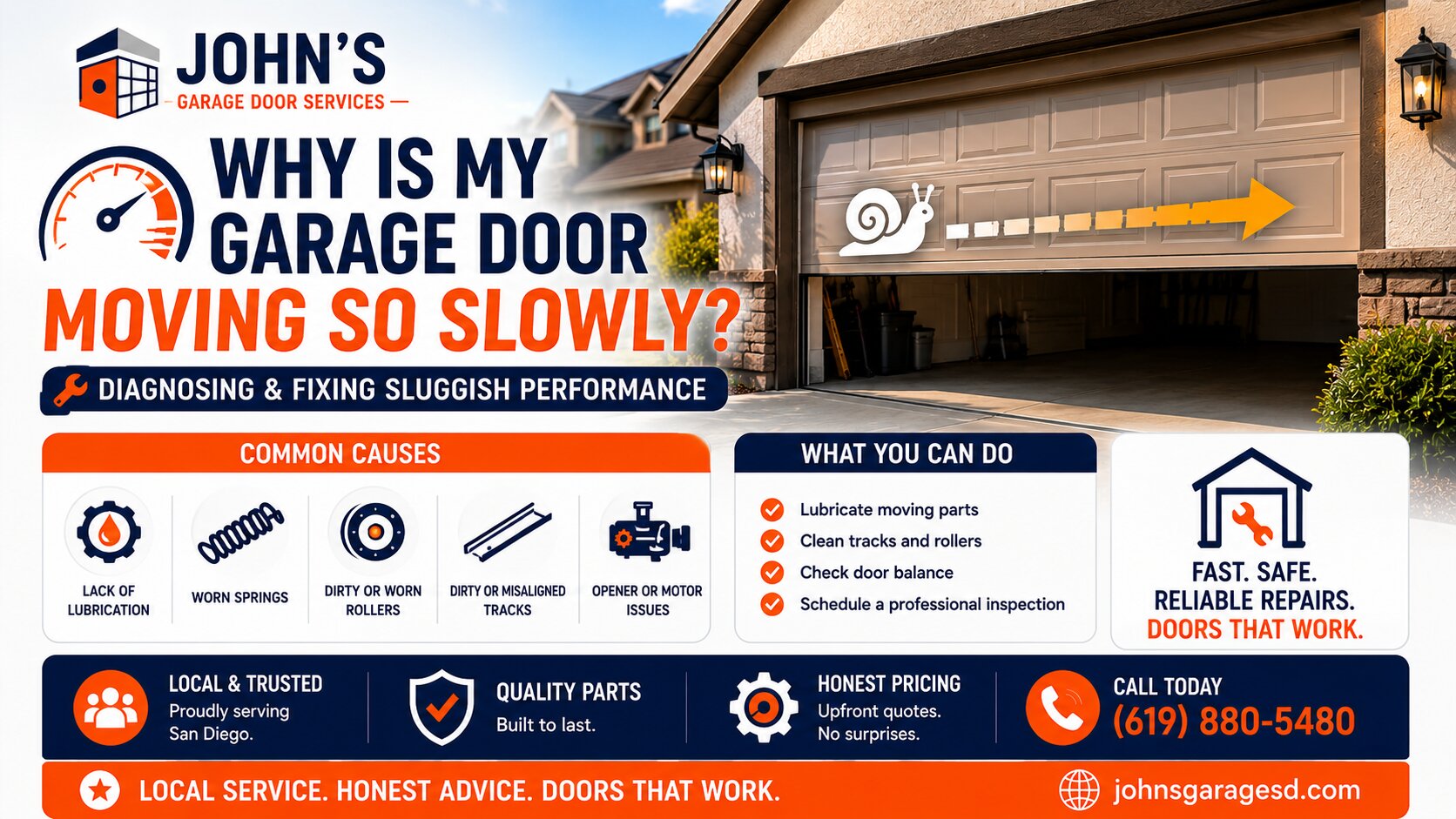
In my years running John’s Garage Door Services, I’ve found that most slow garage door issues fall into three categories: weakened springs, increased friction, or motor problems. Let me walk you through how I diagnose each one and what we can do to fix it.
How Do Worn Springs Cause Slow Garage Door Movement?
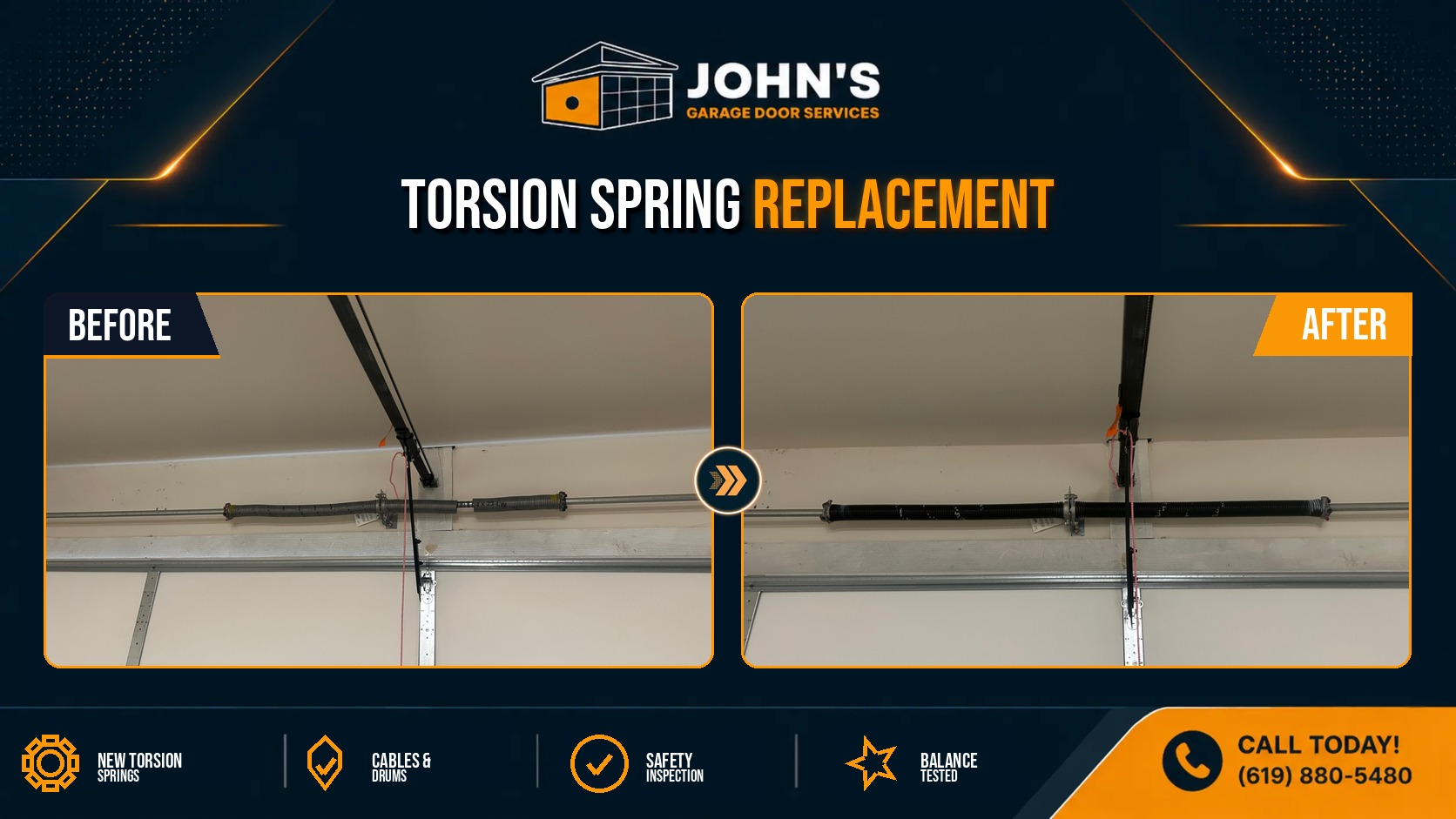
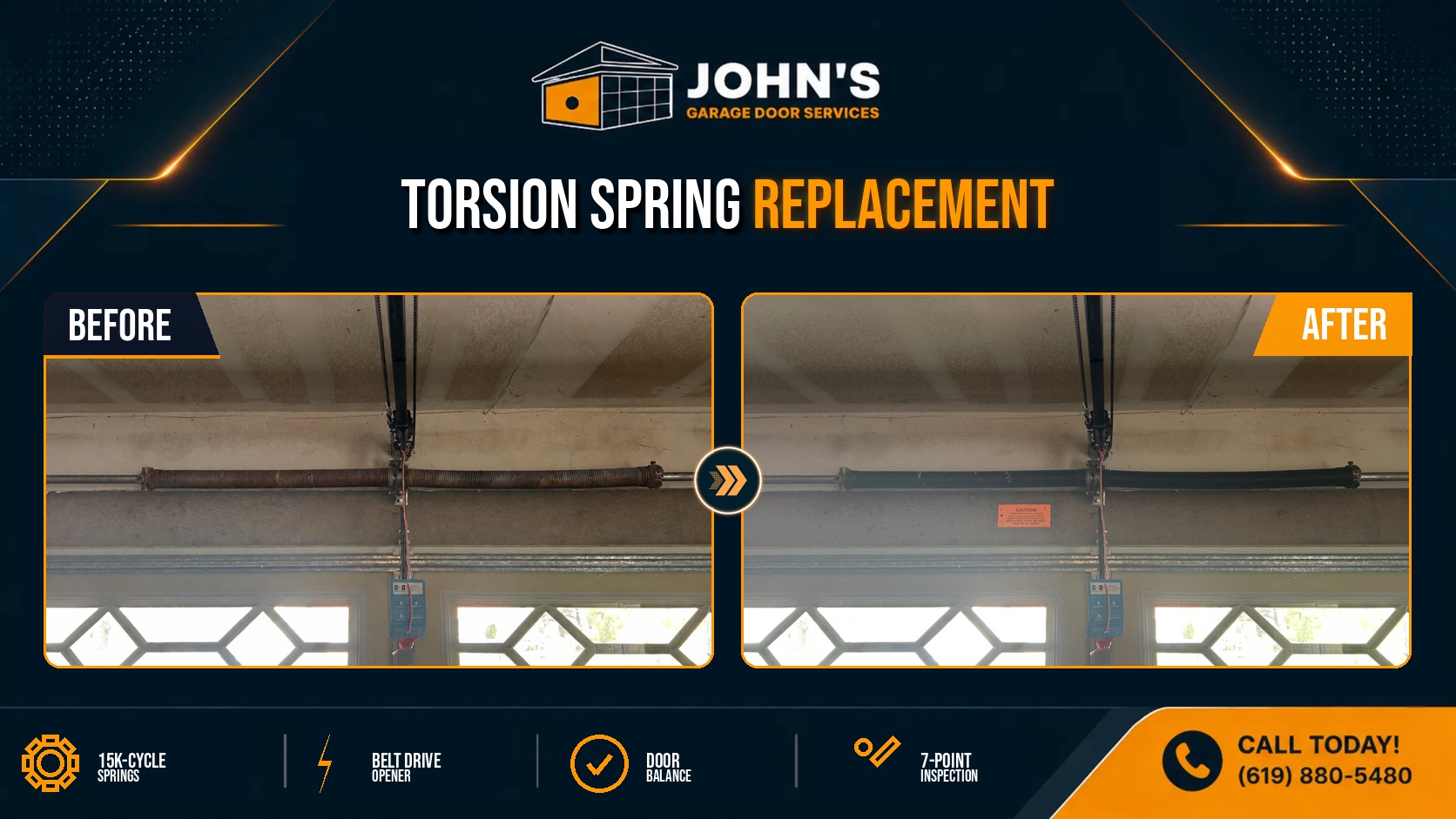
Weak or aging springs are the number one cause of sluggish garage door operation. Your springs do about 90% of the lifting work, and when they lose tension, your opener motor struggles to compensate.
Here’s how I test for spring issues: I disconnect the opener and manually lift the door about three feet. A properly balanced door should stay in place. If it slowly drifts down or feels extremely heavy, the springs have lost their tension.
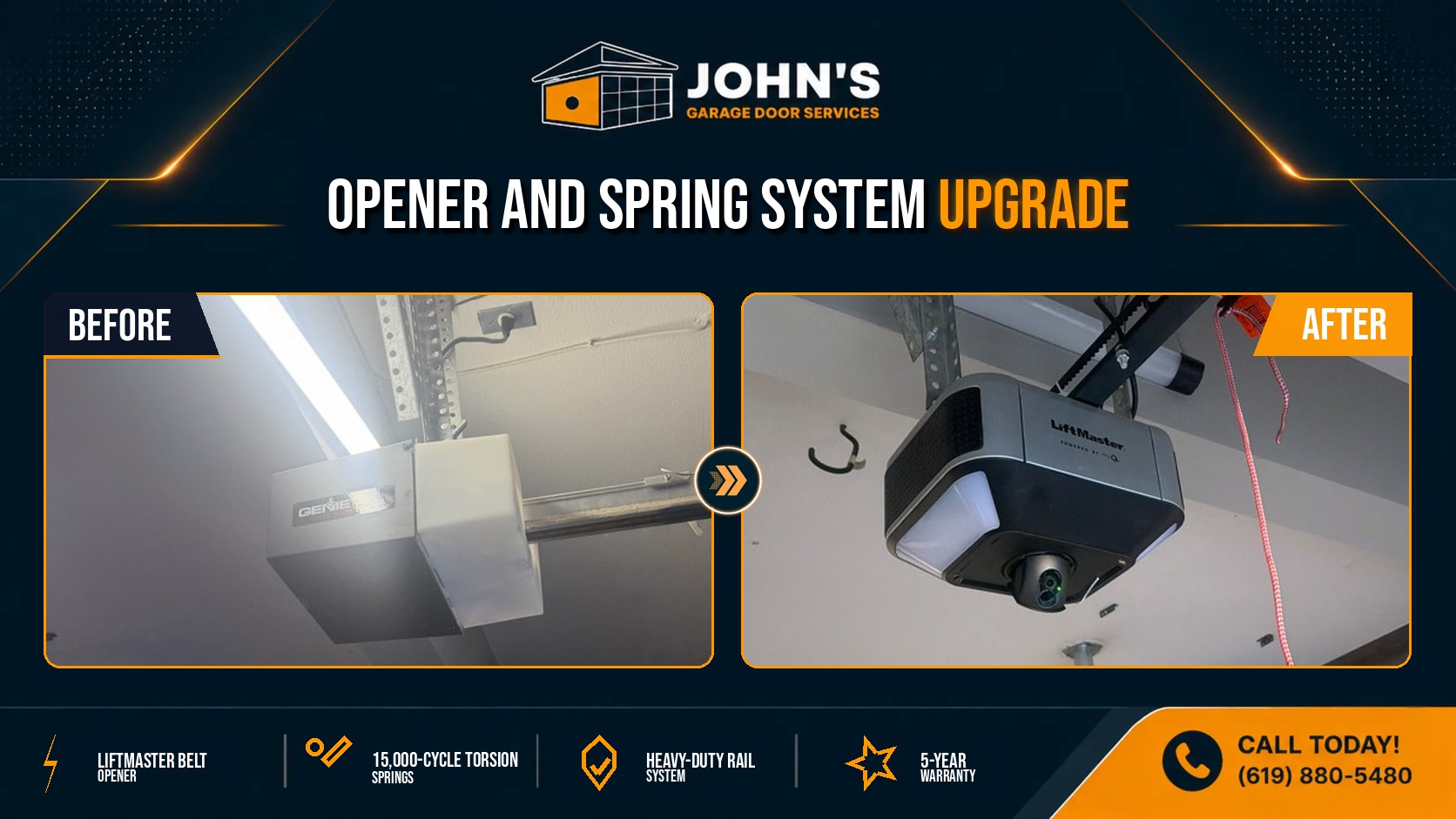
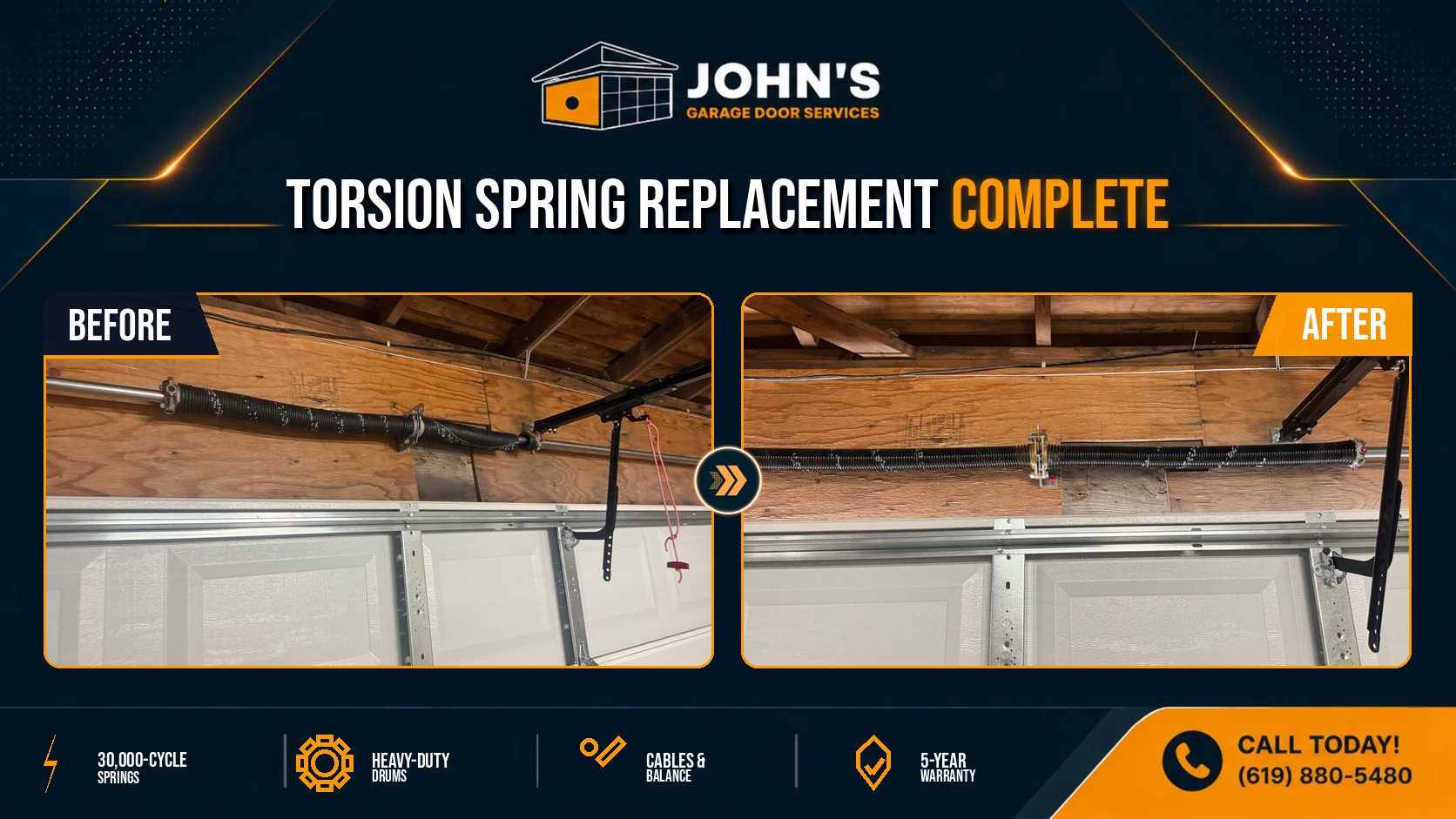
In San Diego’s climate, torsion springs typically last seven to nine years with proper maintenance. Coastal areas like Point Loma and La Jolla see faster spring degradation due to Salt Air And Garage Door Springs exposure. If your springs are approaching their lifespan or showing visible gaps between coils, they’re likely causing your slowdown.
Friction Points That Slow Your Door Down
The second most common culprit in my experience is increased friction along the track system. This happens when rollers wear down, hinges stiffen, or tracks accumulate grime and debris.
I check every roller on the door, looking for flat spots, cracks, or worn bearings. Track alignment matters too. I place a level against each track section to verify they’re plumb and properly spaced.
When the Garage Door Opener Motor Is the Problem
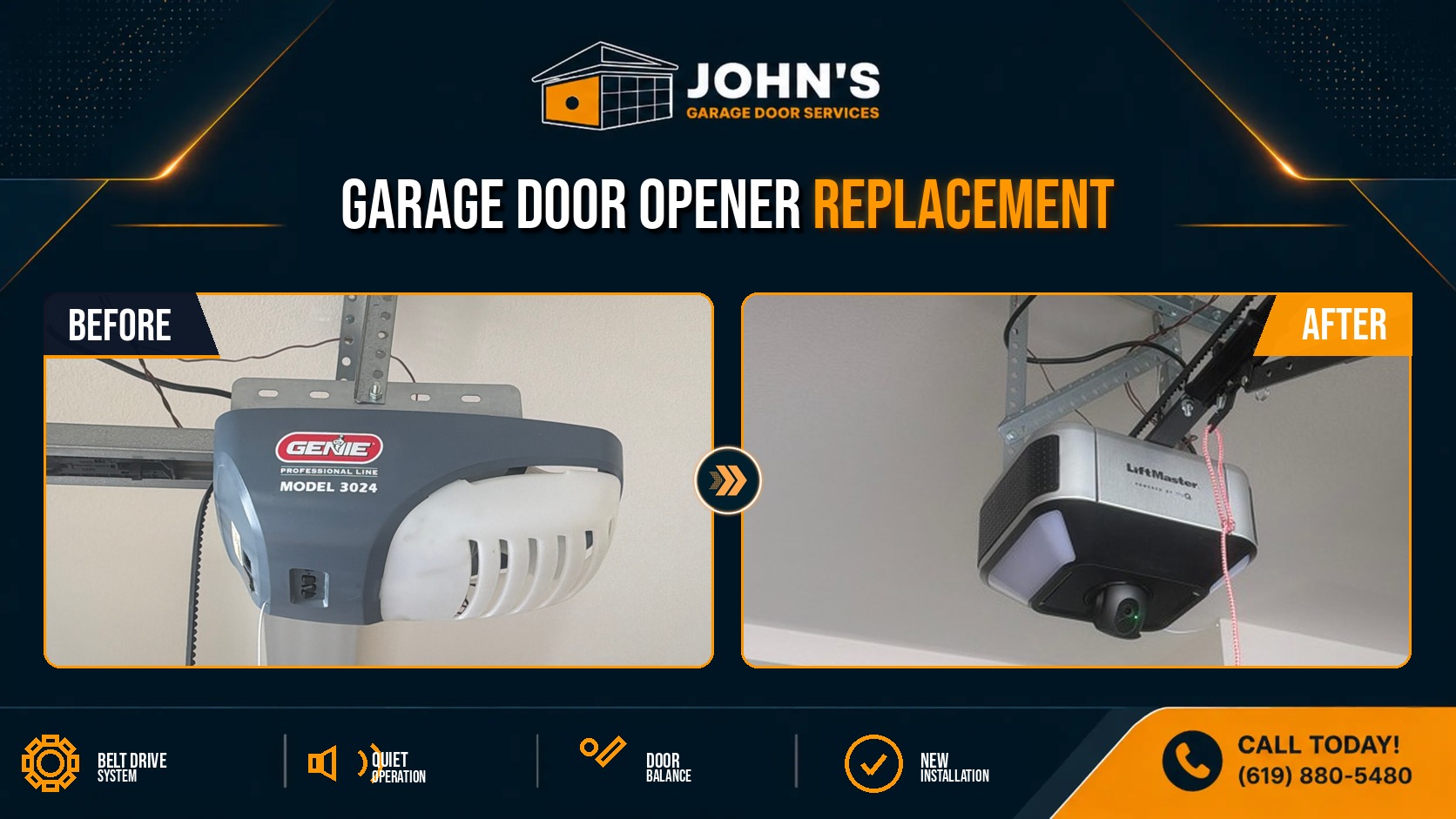
Sometimes the issue isn’t with the door itself but with the opener motor losing power. Capacitors weaken over time, especially in hot inland areas like Santee and El Cajon where garage temperatures regularly exceed 100 degrees in summer.
A failing capacitor causes the motor to struggle during startup, creating that characteristic slow, labored movement. I test this by listening to the motor. If it hums loudly or takes several seconds to engage, the capacitor is usually the culprit.
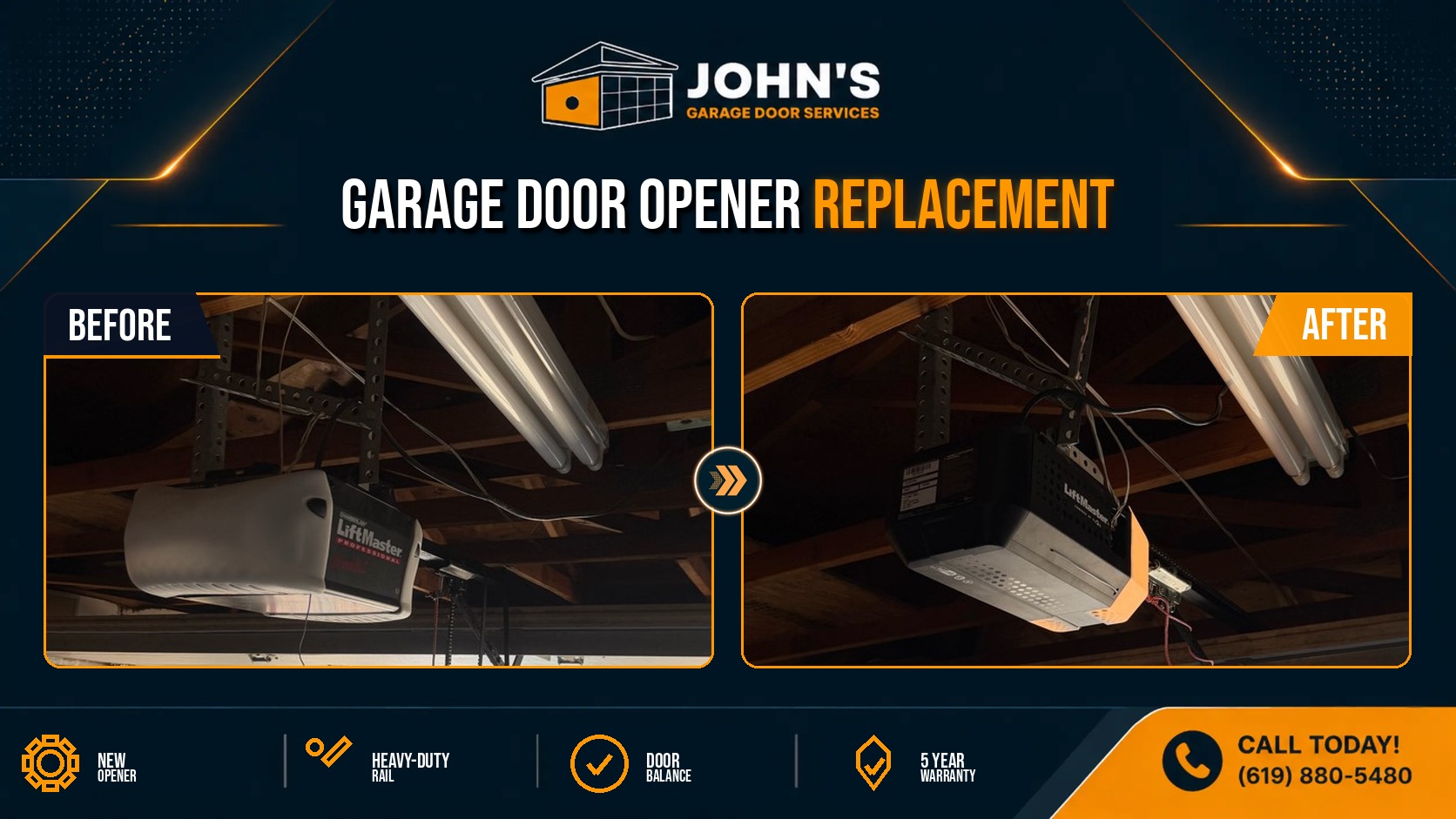
Belt-drive and chain-drive systems can also develop slack over time, reducing power transfer efficiency. We adjust tension according to manufacturer specifications, which typically allows about a half-inch of vertical play. If you’re experiencing motor issues along with Common Garage Door Sensor Problems, it may indicate a broader electrical issue.
What Regular Maintenance Prevents Slowdown Issues?
Preventive maintenance significantly extends the period between major repairs. I recommend lubricating all moving parts every six months with white lithium grease or silicone-based lubricant.
This simple maintenance step prevents many friction-related slowdowns I see in Mira Mesa and Clairemont homes. Our comprehensive Garage Door Maintenance Service covers all these essential tasks to keep your door running smoothly.
Get Professional Diagnosis for Your Slow Garage Door
While some maintenance tasks are DIY-friendly, diagnosing the exact cause of slow garage door movement requires professional experience and tools. Springs, in particular, store dangerous amounts of tension and should only be adjusted or replaced by trained technicians.
I’ve seen too many homeowners in San Diego turn a $200 spring replacement into a $1,500 repair by attempting DIY fixes that damaged tracks, panels, or opener systems. Our team at John’s Garage Door Services provides free diagnostics to pinpoint exactly what’s causing your slowdown, and we’ll explain all your options before starting any work.
If your garage door is moving slower than it should, Get A Quote and we’ll get it operating smoothly again.
John Josef – 15 Years of Garage Door Expertise – John’s Garage Door Services, Locally Owned and Operated. We provide top-quality garage door repair, installation, and maintenance with a strong commitment to honest, reliable customer service.