I’ve spent countless early mornings in Point Loma and La Jolla troubleshooting garage doors that suddenly won’t close, and the culprit is almost always the same. Our beautiful San Diego marine layer, that thick coastal fog rolling in overnight, wreaks havoc on garage door sensors in ways most homeowners never expect.
After years of service calls in coastal neighborhoods, I’ve learned exactly why this happens and how to fix it. Let me share what I’ve discovered about this frustrating but very solvable problem.
Why Does Coastal Fog Trigger Garage Door Sensor Problems?
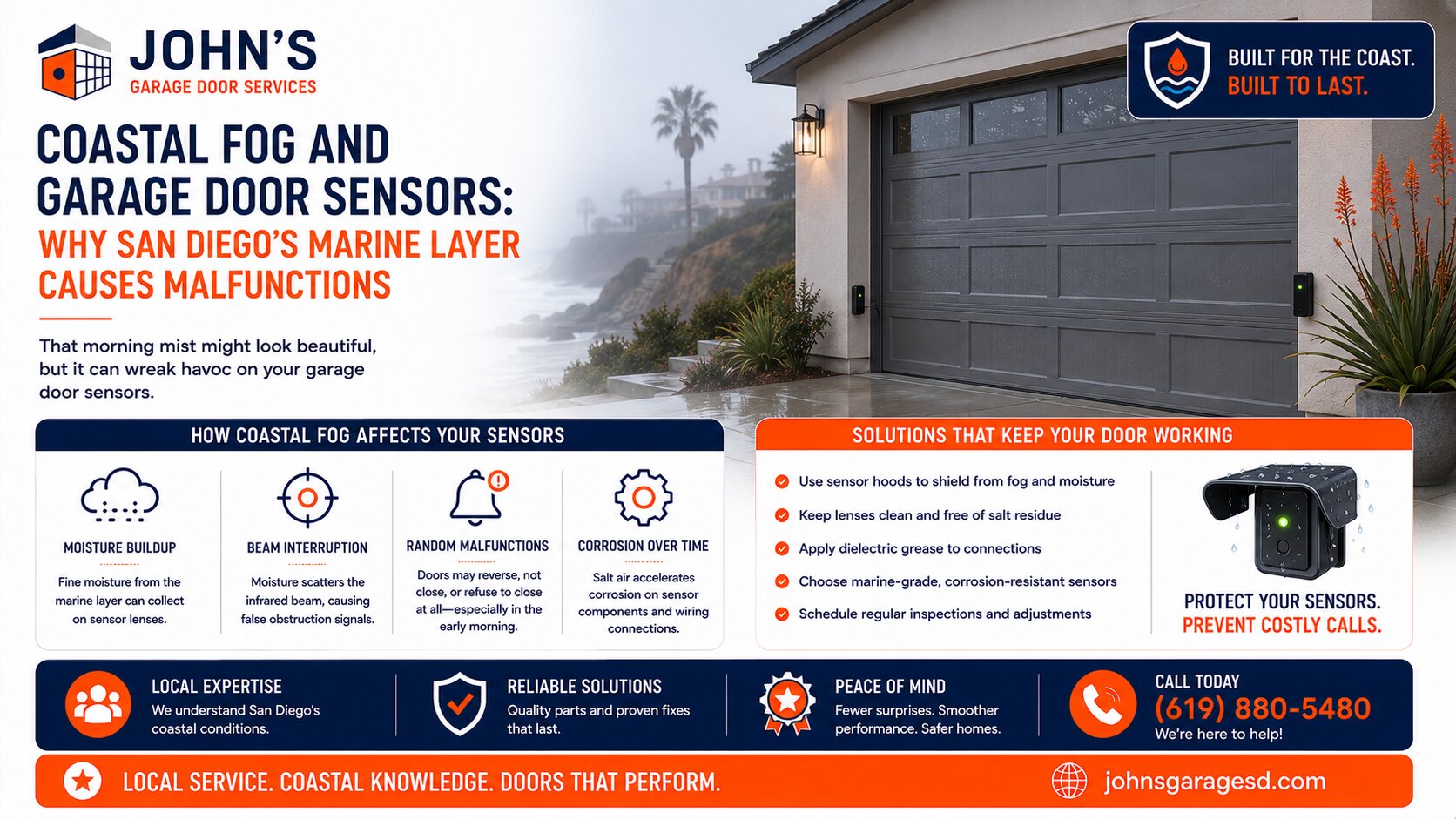
Coastal fog causes garage door sensors to malfunction because moisture accumulates on the sensor lenses, blocking or scattering the infrared beam that keeps your door operating safely. When sensors can’t “see” each other clearly through the fog droplets, your door thinks something is blocking the path and refuses to close.
The marine layer in San Diego typically rolls in during late spring through early fall, bringing humidity levels that can reach 90% or higher overnight. This moisture doesn’t just sit in the air.
It condenses directly onto every cool surface it touches, including your sensor lenses. I’ve noticed this problem is especially severe in neighborhoods close to the coast like Ocean Beach, Pacific Beach, and Encinitas.
The closer you are to the water, the thicker that fog gets and the more frequently you’ll experience sensor issues. Regular Garage Door Maintenance For San Diego Homeowners can help prevent many of these moisture-related problems before they become serious.
The Blinking Light Mystery Explained
Immediate Fixes You Can Try Right Now
Long-Term Solutions for Chronic Fog Problems
When Moisture Causes Permanent Sensor Damage
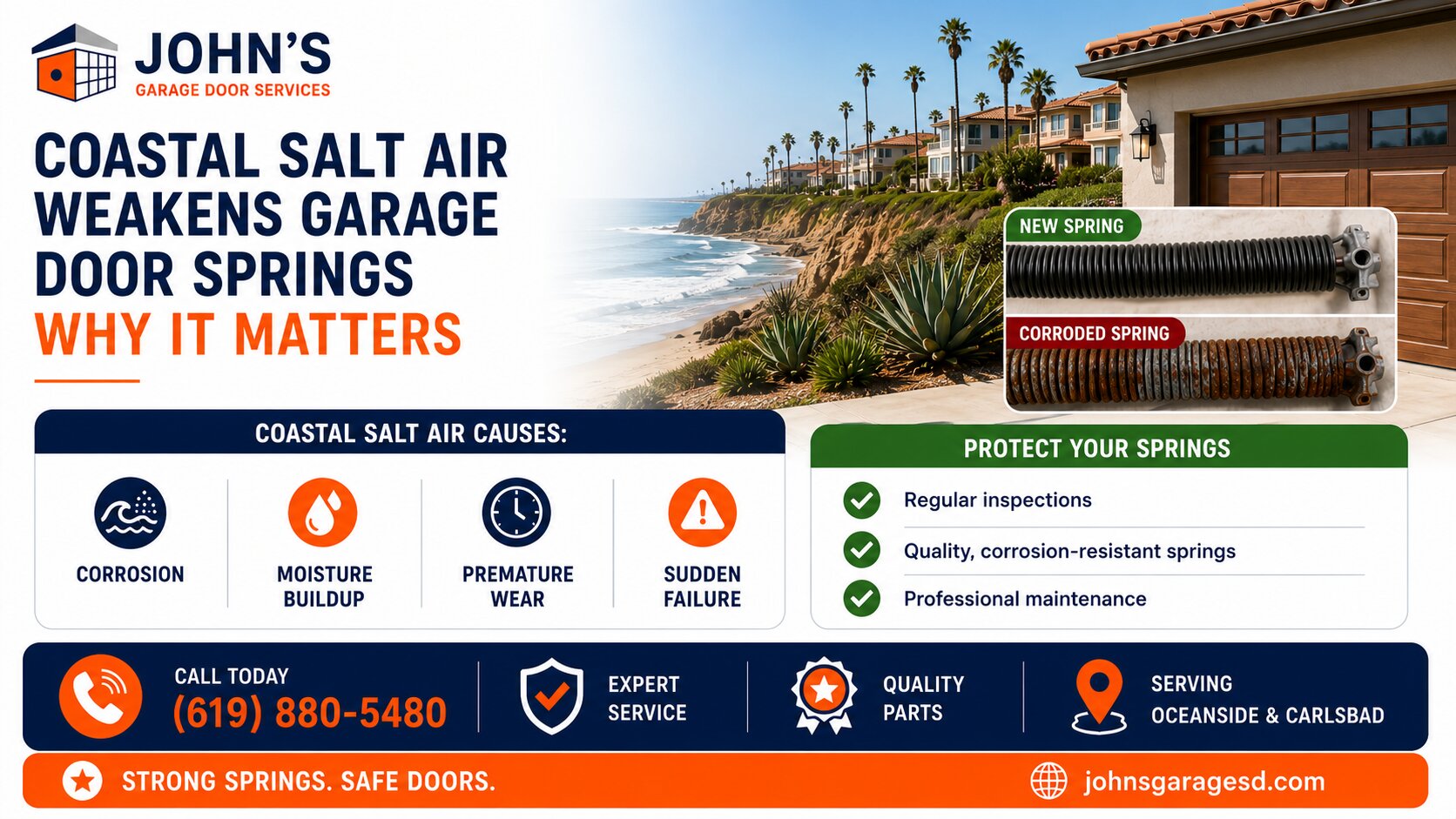
Sometimes the moisture doesn’t just block the beam temporarily. In California’s coastal climate, prolonged exposure to humid marine air can corrode the internal sensor components, causing permanent failure.
I’ve replaced countless sensors in homes throughout San Diego County where the circuit boards inside showed visible corrosion from years of fog exposure. Once this happens, no amount of cleaning or drying will restore function.
If your sensors continue malfunctioning even after thorough drying and cleaning, or if you notice any rust or corrosion on the sensor housings, replacement is usually the most cost-effective solution. Our Garage Door Maintenance Service includes thorough sensor inspections to catch corrosion early before it leads to complete failure.
Professional Help When You Need It
Living with a garage door that won’t close reliably isn’t just frustrating, it’s a security risk. If you’ve tried these troubleshooting steps and your sensors still act up every time the marine layer rolls in, we can help.
Our team at John’s Garage Door has been solving coastal fog sensor problems throughout San Diego for years. We’ll diagnose the exact cause of your malfunction, recommend the most effective solution for your specific location, and get your door working reliably again.
Get A Quote, and let’s solve this fog problem once and for all.
John Josef – 15 Years of Garage Door Expertise – John’s Garage Door Services, Locally Owned and Operated. We provide top-quality garage door repair, installation, and maintenance with a strong commitment to honest, reliable customer service.
Get In Touch With Us
Recent Works